Top 10 CMS for business (for Eastern Europe)
Updated: 13.06.2026
Some of the most popular business-oriented CMS are mentioned below.
Users that searched for Top 10 CMS for business (for Eastern Europe) then also viewed the following software:
See also: Top 10: Website Builders for Eastern Europe
Users that searched for Top 10 CMS for business (for Eastern Europe) then also viewed the following software:
See also: Top 10: Website Builders for Eastern Europe
2025. WordPress now allows connecting AI agents to the site via MCP
A new version of the content management system WordPress 6.9 has introduces components for connecting websites to the AI Internet. First, this is the Abilities API – a new API interface that allows plugins, themes, and the WordPress engine itself to describe their capabilities in a format understandable not only to regular programs but also to AI agents. Second, webmasters can now install the MCP Adapter plugin, which makes their website accessible to AI agents via the MCP protocol. This allows website content to be used as context for AI chat (for example, to conduct an SEO content audit, analyze statistics, and compile sales reports) and even ask the AI agent to perform actions on the website (create posts, edit them, and delete bad comments). Although the AI functions are not yet visible in the WordPress admin interface, the foundations created mean that WordPress is now understandable to AI systems.
2025. Joomla 6.0 CMS has improved performance and security
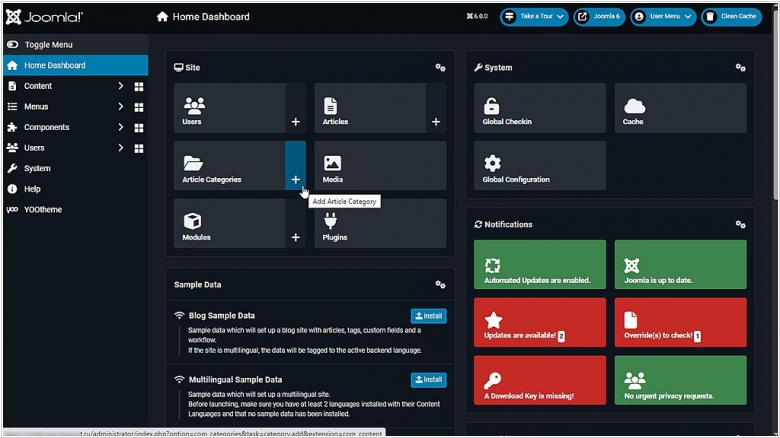
A new version of the open-source content management system Joomla 6.0 has been released. It adds numerous new features, security and code improvements which also helped to enhance its performance. Secure update system via TUF has been introduced and the new Behaviour – Backward Compatibility 6 plugin for Joomla 5.4 ensures a smoother upgrade to Joomla 6. The standard Joomla Cassiopeia template now includes options for customizing colors and fonts without the need to create custom CSS files. The versioning system has been expanded to include custom field data. Besides, new custom field types have been added: Notes and Numbers. Also you can now bulk edit tags for materials.
2021. WordPress 5.7 simplifies migration from HTTP to HTTPS
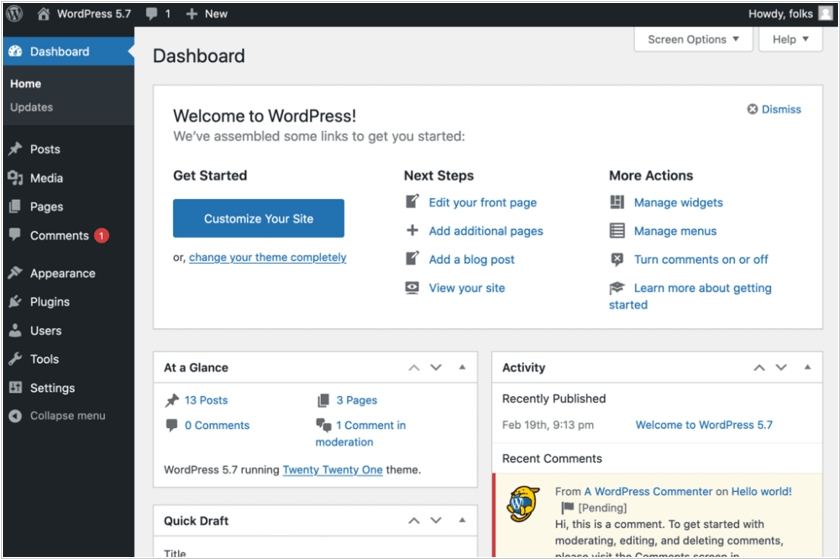
New version of the open-source CMS platform for WordPress 5.7 has been released. The new version offers a new color palette. Frequently used features, such as font sizing, are now instantly accessible when needed. You can also make layout changes, use the one-click HTTP to HTTPS migration feature (this is especially important, as using HTTPS on websites encrypts data and improves user security), and change the design of icons and buttons without using HTML markup or CSS.
2020. Adobe Experience Manager now offered as cloud-native SaaS application
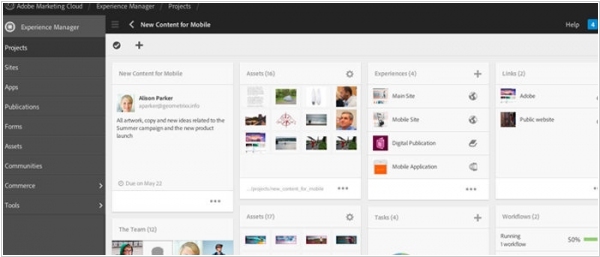
CMS software Adobe Experience Manager is now available as a cloud-native SaaS system. Prior to this, it was available on premises or as a managed service, but it wasn’t pure cloud-native. Obviously being available as a cloud service makes sense for customers, and offers all of the value you would get from any cloud service. Customers can now access all of the tools in AEM without having to worry about maintaining, managing or updating it, giving the marketing team more flexibility, agility and ongoing access to the latest updates. AEM provides a number of capabilities, including managing the customer experience in real time. Having real-time access to data means you can deliver the products, services and experiences that make sense based on what you know about the customer in any given moment.
2015. Drupal 8 implemented visual page builder
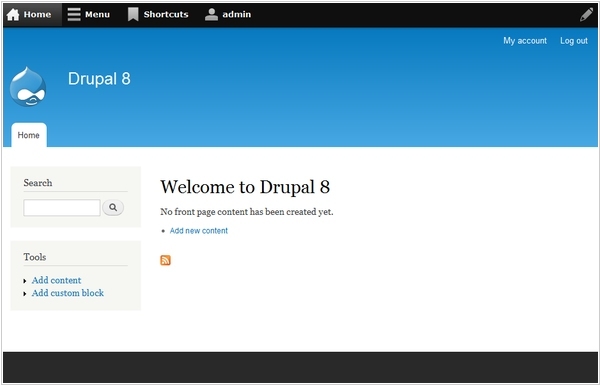
Drupal released the long-awaited Drupal 8.0 platform that includes: in-context, what-you-see-is-what-you-get (WYSIWYG) editing and previews, content modeling out of the box with entities, fields and views, customization of content pages and even forms and administrative pages via the administrative interface, full translatability and localization out of the box, configuration management for deployment of changes between environments, mobile-first, responsive, HTML5 output, REST-first native web services, enhanced accessibility and WAI-ARIA compliance, modern PHP standards and practices, with integration of libraries such as Composer, Symfony2, Guzzle and Twig, improved front-end performance out of the box, enhanced caching and integration with CDNs and reverse proxies, full compatibility with PHP7, and the PostgreSQL and SQLite databases