WordPress
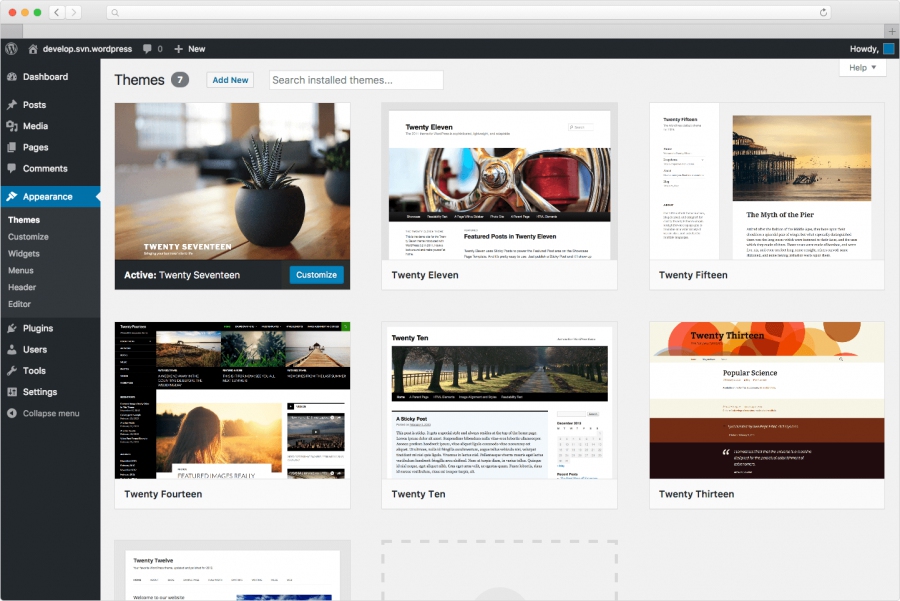
Free, open-source CMS. Suitable for everything from blogs to complex news resources and online stores. The built-in theme and plugin system, coupled with a well-designed architecture, allows for the creation of projects with a wide range of functional complexity. SaaS version is available on Wordpress.com
Add comment
Add comment
Alternatives and relevant products
Users who were interested in WordPress, then also viewed:
News about WordPress
08.06.26. WordPress.com launches Telegram bot
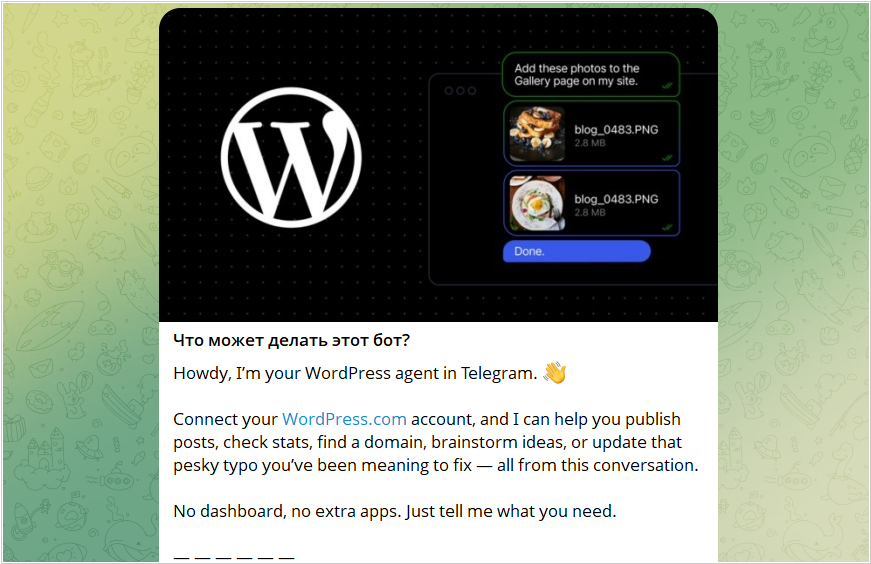
Website creation service WordPress.com has introduced a Telegram bot that lets you manage your website directly in the messenger - this is convenient when you're on the go, don't have a mobile app, and accessing your site through your phone's browser is inconvenient. Using the bot, you can publish posts, check statistics, find new domains, and correct typos. To get started, you need to connect your WordPress.com account (it works only with the paid service, not just any WordPress site).
2026. WordPress.com's AI agent can moderate comments.
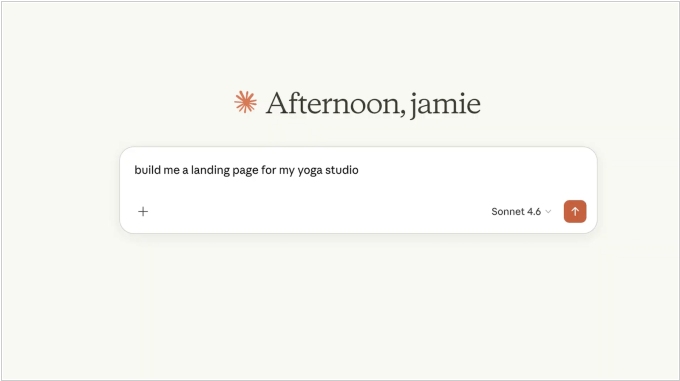
The AI agent in WordPress.com can now create, edit, and publish content on client websites, as well as moderate and respond to comments, edit metadata, and organize content using tags and categories. Simply explain the task in the chat, and it gets to work. The company states that all changes require user approval, and posts written by the AI are saved as drafts by default. All changes made by the AI can also be tracked through the website activity log. The developers claim that it's now possible to create almost an entire website using the AI agent. Thanks to MCP support on WordPress.com, you can connect to the platform from your preferred development environment, such as Cloud Desktop, Cursor, VS Code, and others.
2026. Wordpress.com introduced personal offline version
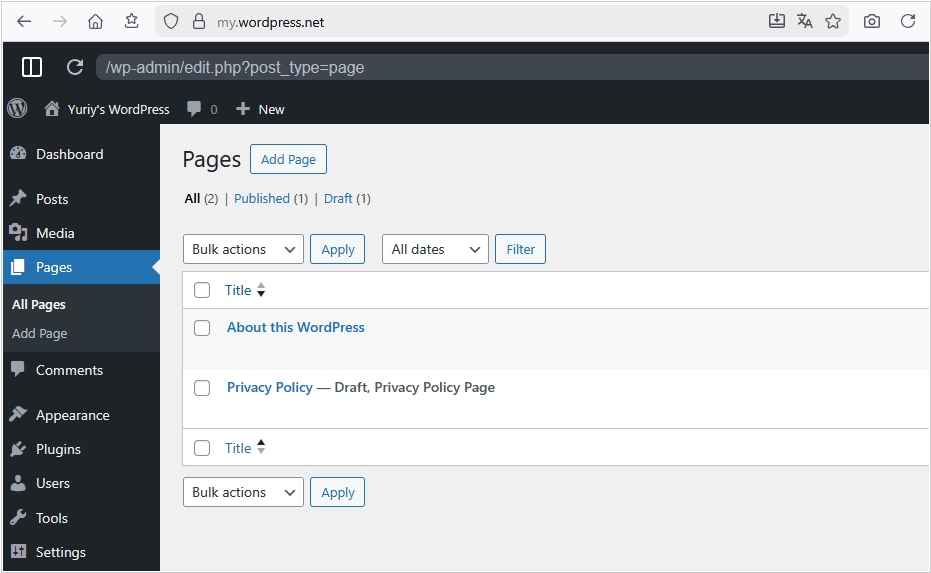
There are so many plugins for WordPress that it now makes sense to use it as a personal app, for example, an organizer, notepad, Helpdesk or a CRM system for an entrepreneur. But, of course, no one is going to buy hosting, domain and bother installing CMS just for that. That's why the creators of WordPress.com came up with a local offline version. You simply go to my.wordpress.net and wait for all the scripts to download for the first time. After that, the standard WordPress admin panel is saved in your browser. All posts and files are also saved there (in the browser's internal memory). Next, install the plugins. You can disconnect from the internet, but the app will continue to work. Of course, you need to understand the limitations: such an app will not work in another browser, will not be accessible over the internet on your phone, and if you reinstall the browser or accidentally clear site data, all data and files from the app will be lost.
2026. WordPress.com added AI assistant
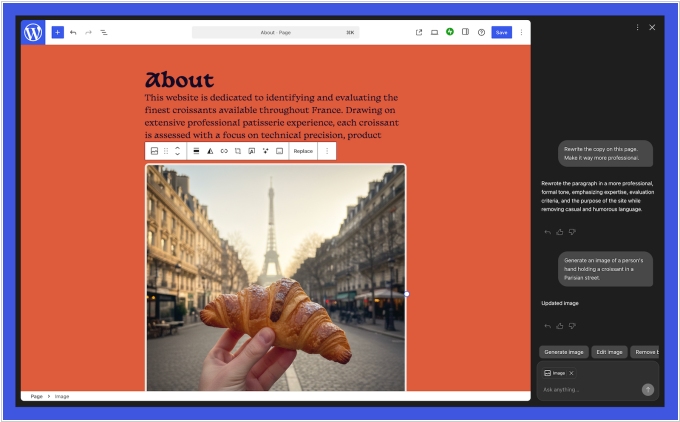
WordPress.com (the SaaS version of the CMS system from Automattic) has added a built-in AI assistant for editing websites in the context of their content and structure, allowing site owners to make changes using natural language commands. The new tool allows to adjust the site's structure and styles using specific or general statements, such as "make this section more modern or spacious" or "change the site's colors to be brighter and more saturated" or "add Contacts page". However, the assistant only works with block themes, not classic ones. The AI can also write/update website content, suggest headline variations, generate images and fact-check (if you trust AI). Google Gemini is used as the LLM.
2025. WordPress now allows connecting AI agents to the site via MCP
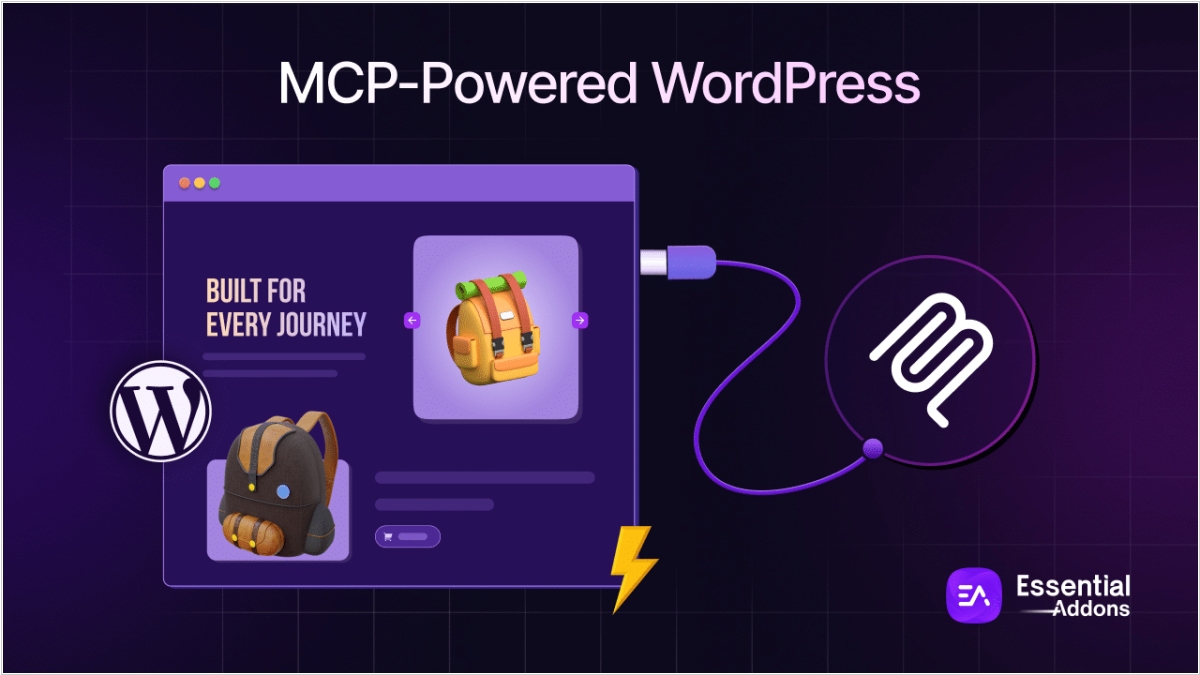
A new version of the content management system WordPress 6.9 has introduces components for connecting websites to the AI Internet. First, this is the Abilities API – a new API interface that allows plugins, themes, and the WordPress engine itself to describe their capabilities in a format understandable not only to regular programs but also to AI agents. Second, webmasters can now install the MCP Adapter plugin, which makes their website accessible to AI agents via the MCP protocol. This allows website content to be used as context for AI chat (for example, to conduct an SEO content audit, analyze statistics, and compile sales reports) and even ask the AI agent to perform actions on the website (create posts, edit them, and delete bad comments). Although the AI functions are not yet visible in the WordPress admin interface, the foundations created mean that WordPress is now understandable to AI systems.
2025. WordPress.com launched free AI-powered website builder
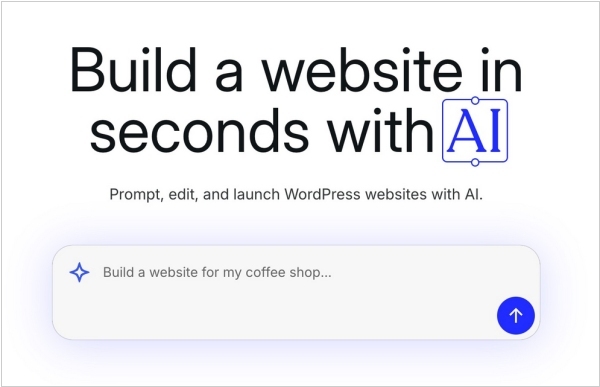
Hosting platform WordPress.com launched a new free AI website builder that allows anyone to create a functioning website. It's targeted at entrepreneurs, freelancers, bloggers and can't be used to create more advanced websites like e-commerce stores. To use the new tool, users engage with an AI chatbot in a conversational style to design the website with their own text and images and to configure the site’s layout. To get started, users first type in a prompt that explains their website idea — like “build a website for my coffee shop.” The new service may help WordPress better compete with companies like Squarespace and Wix, which offer AI builders to speed up site creation and design.
2021. In WordPress 5.8.1 developers fixed three security issues
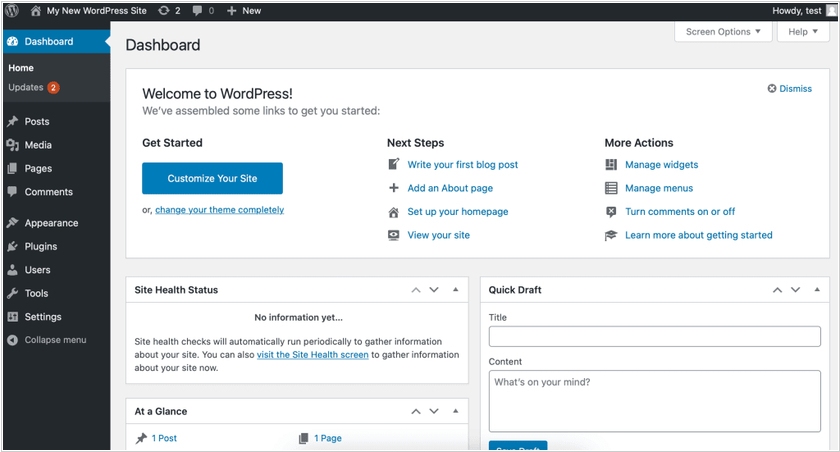
The WordPress open-source team has announced the release of version 5.8.1. In this update, the developers addressed a number of security issues in the REST API, the Gutenberg block editor, and the Lodash JavaScript library. Additionally, 60 bugs were fixed. All three security issues are quite serious, so the WordPress team recommends updating sites to the latest version.
2021. WordPress 5.8 Expands Site Health Interface
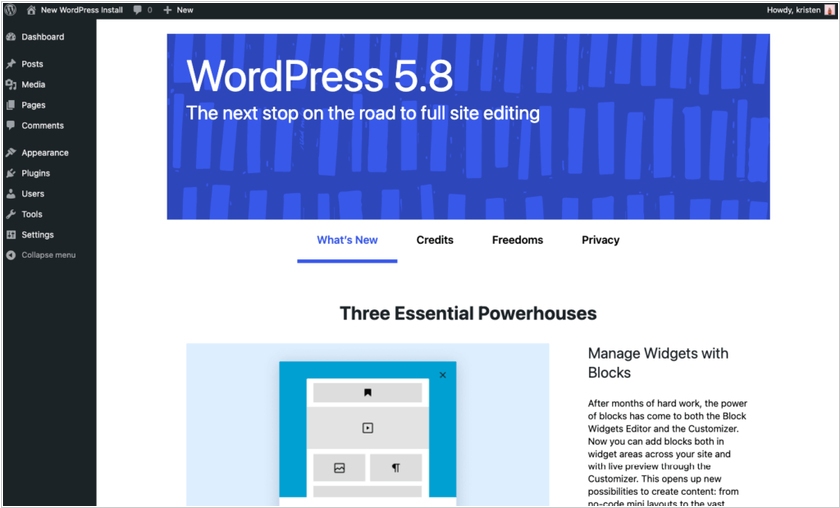
The new version of the popular free CMS WordPress 5.8 allows web developers to extend the Site Health administrative interface. Developers will now be able to include their own tabs to help website administrators navigate the Site Health portal more easily. When installing new plugins, Site Health will check whether the add-on requires a PHP version incompatible with the rest of the site. If so, WordPress will prevent web administrators from installing it. PHP, the primary programming language used for websites built on WordPress, has become an attractive target for malicious hackers in recent years. Therefore, the ability to identify older, potentially insecure versions of PHP is an important tool needed to protect against attacks. In addition to site health improvements, WordPress 5.8 also includes several new block editor features, support for the WebP image format, an "Update URI" header for plugin developers, and various REST API changes.
2021. WordPress 5.7 simplifies migration from HTTP to HTTPS
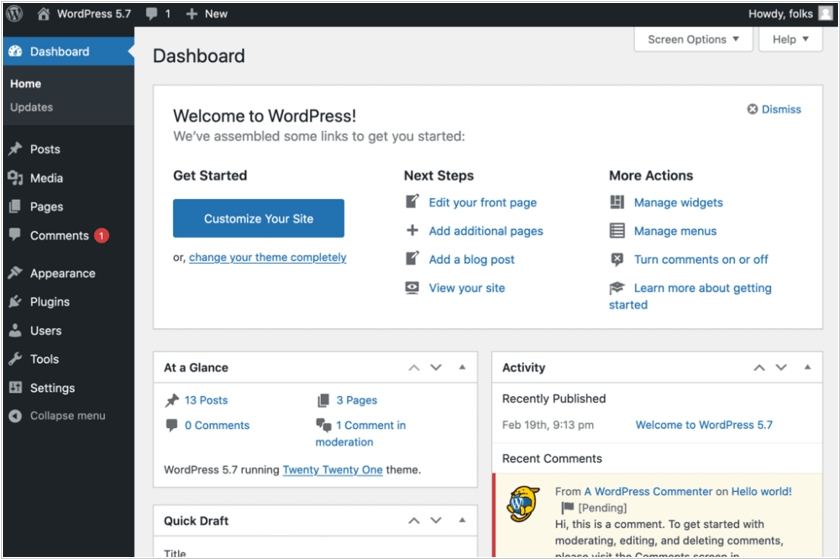
New version of the open-source CMS platform for WordPress 5.7 has been released. The new version offers a new color palette. Frequently used features, such as font sizing, are now instantly accessible when needed. You can also make layout changes, use the one-click HTTP to HTTPS migration feature (this is especially important, as using HTTPS on websites encrypts data and improves user security), and change the design of icons and buttons without using HTML markup or CSS.
2021. Automattic acquires analytics company Parse.ly
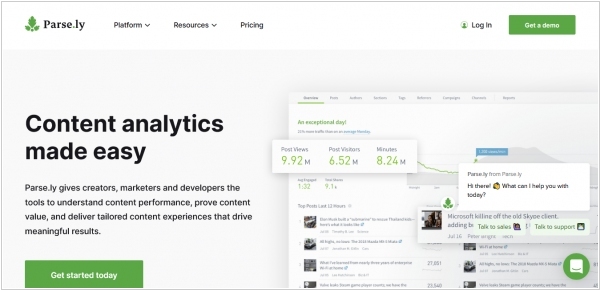
Automattic, the for-profit company tied to open-source web publishing platform WordPress, is announcing that it has acquired analytics provider Parse.ly. Parse.ly gives creators, marketers and developers the tools to understand content performance, prove content value, and deliver tailored content experiences that drive meaningful results. WordPress and Parse.ly already work well together, but the plan is to make WPVIP (enterprise hosting and support to publishers) features available to Parse.ly customers while also making more Parse.ly data available to WPVIP publishers. And there are also opportunities to add more commerce-related data to Parse.ly, since Automattic also owns WooCommerce.
2020. Brute-force attacks against WordPress
Akamai security expert Larry Cashdollar published research on the Stealthworker malware, which is actively used for brute-force attacks on popular online platforms. The malware exploits WordPress installations with weak passwords and attempts to brute-force other content management systems and network services. Potential targets include WordPress, cPanel, Drupal, Bitrix, OpenCart, Magento, and MySQL, PostgreSQL, SSH, and FTP services.
2019. Google unveiled Site Kit plugin for WordPress
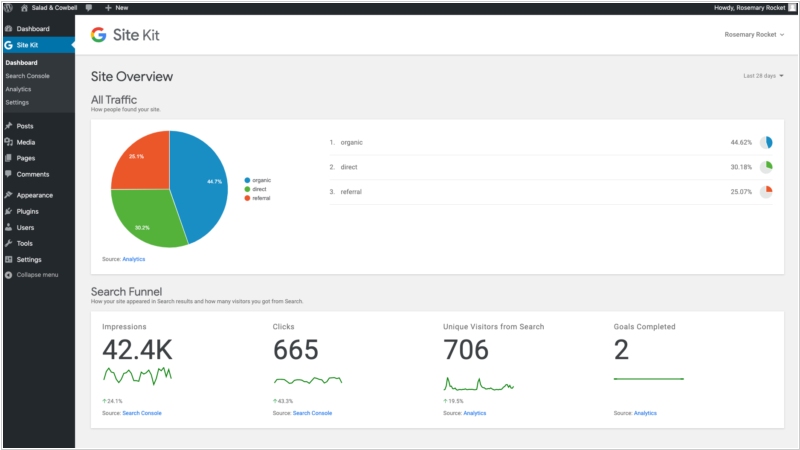
Google has released the Site Kit plugin for WordPress sites. It allows webmasters to connect their WordPress admin panel with Google Search Console, Google Analytics, PageSpeed Insights and AdSense to get all analytics in one place. The main Overview dashboard provides a high-level view of significant changes and how users find your site: clicks and impressions in search, list of the top-performing pages, AdSense revenue, site speed metrics provided by PageSpeed Insights and a comparison of new and returning visitors. Perhaps most useful are the individual page reports, which are available in a drop-down box when viewing a specific page or post. Overall, Site Kit does not replace Google Analytics, but only provides quick analytics data. You do not have access to reports on sales funnels, attribution models, or filters. You can't edit events or view forecast metrics, and there's no audience support.
2017. WordPress app for Android has been improved for Jetpack-based sites.
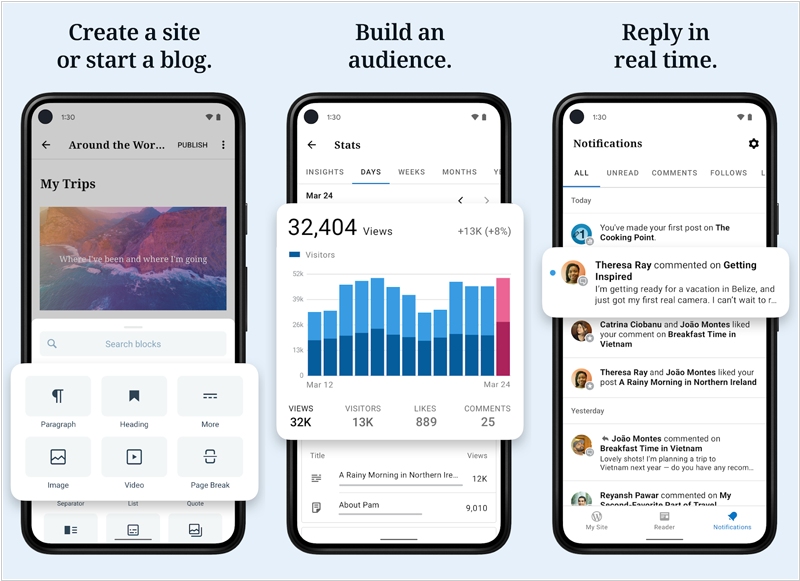
Automattic has released a major update to its WordPress mobile app for Android, which allows to manage website from smartphone. Last year, app users faced a growing gap between the features available to self-hosted sites and those available on WordPress.com paid service. The lack of a WP REST API in the app's core prevented them from using the same site management features that WordPress.com site owners already enjoy. The upcoming release closes this gap with improved support for Jetpack-based sites. Jetpack is a universal WordPress plugin developed by Automattic to attract users of the open-source CMS to its paid service. Self-hosted WordPress site owners will now have access to user management and site settings features within the app. Completely redesigned network layer ensures faster performance of statistics and other features. The app also enables adding new blog posts and pages, commenting, moderating comments, replying to comments.
2015. WordPress.com goes Open Source and gets a desktop app
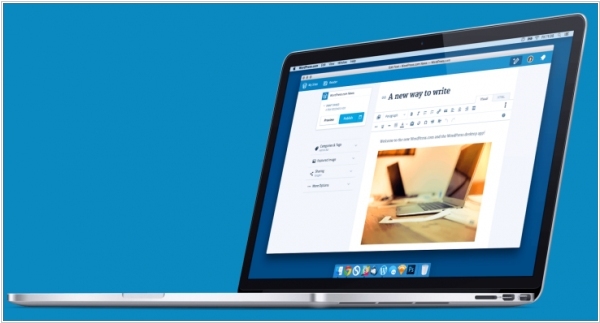
WordPress.com, the WordPress hosting service has unveiled one of its biggest updates. First, WordPress.com (i.e. its admin interface) is now fully separated from the WordPress CMS. It interacts with the CMS via REST API to fetch your posts, publish new ones, upload photos and more. Second, the team behind WordPress.com switched to an entirely new stack. Instead of using PHP and MySQL, the developers built the admin console on JavaScript. It means that when you go to the website - you download full WordPress.com client that runs in your browser. Finally, everything is open source now and available on GitHub. Also the company unveiled new Mac desktop app for WordPress.com. In many ways, this app works like the browser app. It leverages web technologies and desktop features so that you get more or less the exact same thing, but with a few goodies, such as notifications. Windows and Linux apps are in the works.