
Top 10 Online Graphic Design Software for Eastern Europe
Updated: 15.05.2026
Some of the most popular online graphic design software are mentioned below.
Users that searched for Top 10 Online Graphic Design Software for Eastern Europe then also viewed the following software:
See also: Top 10: Onilne Graphic Design Software for Eastern Europe
Users that searched for Top 10 Online Graphic Design Software for Eastern Europe then also viewed the following software:
See also: Top 10: Onilne Graphic Design Software for Eastern Europe
2026. Canva's AI assistant can now create designs in context of website and business apps
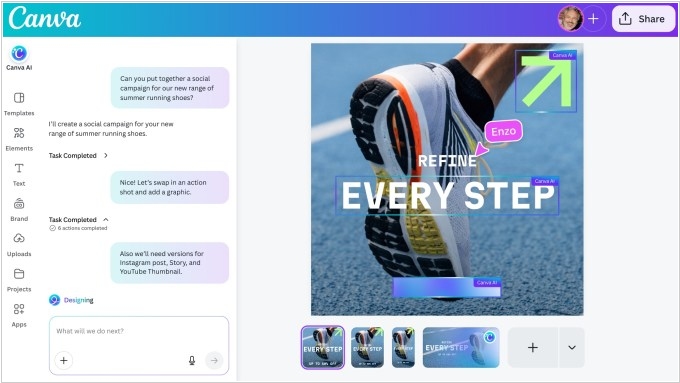
Canva has updated its AI assistant, which now uses its proprietary Lucid Origin model to create editable designs in dialog mode and with integrated tools. As part of this update, Canva has added integrations with Slack, Gmail, Google Drive, Calendar, and Zoom, allowing AI bot to gather context by reading emails, conversations, files, and meeting details. The AI assistant also gets web search capabilities, allowing it to browse websites and gather context. The assistant now uses layers to create designs, giving users the flexibility to customize various aspects of the final product. The AI code generator can now import HTML, and users can use text suggestions to describe the types of spreadsheets they want to create. The company also claims that the new Lucid Origin model is now 5 times faster and 30 times cheaper.
2025. Figma added AI tools for deleting, moving and enlarging objects.
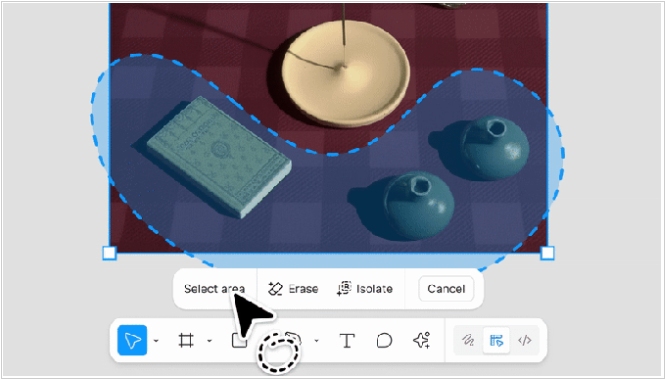
Online design service Figma has added new AI-powered image editing features, including the ability to remove, select and enlarge objects on images. This is done using the lasso tool. When moving an object, the image retains other characteristics, such as background and color. Users can also select an object to adjust parameters such as lighting, shadow, color or focus. The image enlargement feature is useful when you're adapting a creative for a specific format and need to fill in the background or other details. For example, when creating a web banner or mobile banner from a 1x1 image. Essentially, this eliminates the need to constantly crop the image and adjust elements within it.
2025. Google's Gemini 2.0 Flash now allows to edit images
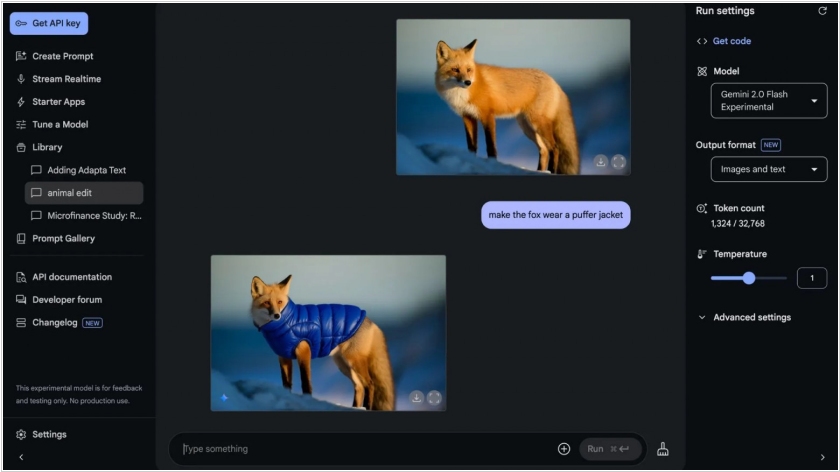
Google'sGemini 2.0 Flash model (which runs on Google AI Studio) now enables image editing using natural language. Unlike earlier multimodal systems that used a combination of separate models (for example, using a language model alongside Imagen 3 to generate images), Gemini 2.0 Flash operates multimodally, generating images directly in the same system that processes text. This eliminates the need for cross-model communication, significantly reducing latency. Because Gemini 2.0 Flash no longer relies on Imagen 3, it has faster response times and a smoother experience. You can even add long text directly to images!
2024. Armenian online photo editor Picsart has been integrated with Getty Images
Picsart, the most successful Armenian startup that develops an online image editor, has integrated with Getty Images, the largest photo bank, to enable marketers to create licensed images using artificial intelligence. Picsart's generative neural network will be trained exclusively on licensed creative content from Getty Images. Users will be able to enhance AI-generated images using any of Picsart's more than 3,000 graphics editor tools, which is ideal for creating social media marketing content, website graphics, and much more. Picsart also announced integration with Getty Images' video bank, providing high-quality animations for business content.
2023. Adobe and Figma cancel merger. It was rejected by the European Commission
Adobe and Figma officially terminated their $20 billion merger agreement after European regulators threatened to block it. In September 2022, Adobe and Figma announced their planned merger. Adobe had planned to acquire Figma for $20 billion. A deal of this size attracted the attention of regulators. The US Department of Justice and UK regulators had reviewed the terms earlier and appeared to have accepted the deal. And in February 2023, the European Commission declared that the proposed merger "would have a significant impact on competition in the interactive design market."
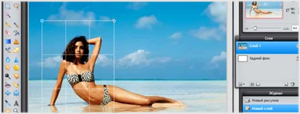
2023. Adobe launches Photoshop’s web version with Firefly-powered AI tools
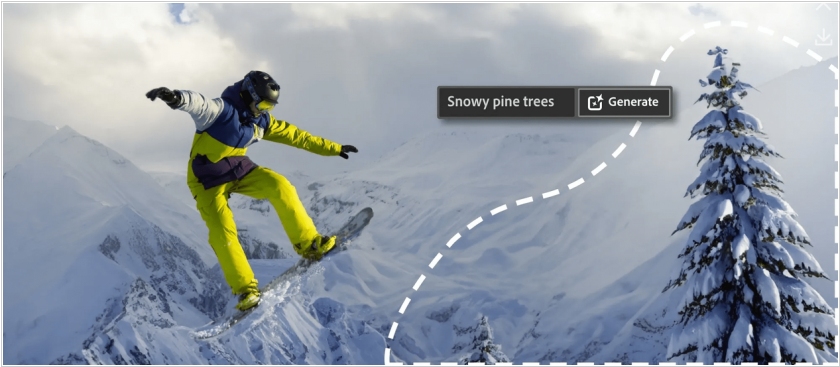
In a move that could only be described as the most delightfully inevitable digital evolution since the invention of the scrollbar, Adobe has finally released the official web version of Photoshop for those who’ve willingly tethered themselves to a paid plan, following nearly two years of diligent beta wandering. This web-based marvel now comes equipped with Firefly-powered AI tools, like “generative fill” and “generative expand,” which are nestled comfortably in the toolbar, keenly focused on guiding users through peculiar workflows involving image reproduction and object selection. Amusingly, rather than relying on cryptic tooltips, Photoshop on the web insists on plainly displaying the full names of its tools—perhaps in a rare burst of cosmic kindness toward bewildered beginners. To add a dash of collaborative chaos, Adobe has also ensured that sharing file links is now possible with other users, regardless of whether they’ve succumbed to the subscription model, thus encouraging a sense of teamwork that’s as effortless as it is unexpected.
2023. Microsoft launched its own AI-powered image editor
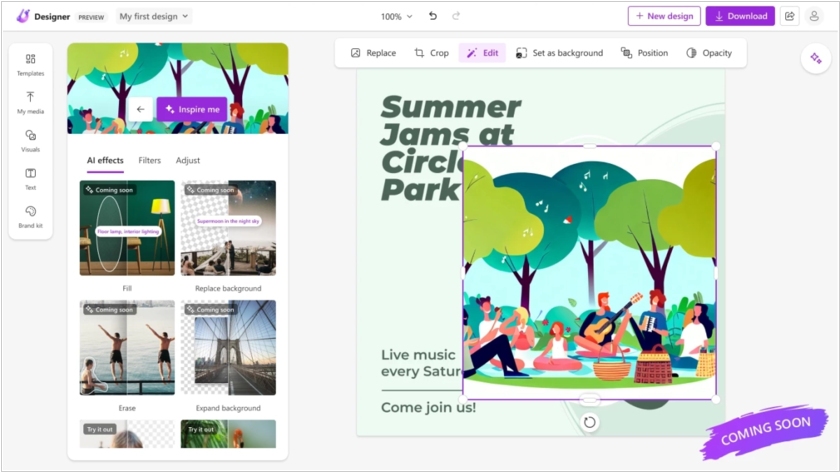
Microsoft has unveiled Designer - a service that will compete with Canva. The tool uses DALL-E 2, OpenAI's neural network, to generate images. It can also create animated visuals with backgrounds and text transitions, powered by artificial intelligence. Designer can also automatically generate text descriptions and hashtags for social media posts, offering several options for selection. During the preview period, the service is free, and the app is accessible through the Designer website or the sidebar in the Microsoft Edge browser. After the official release, Designer will be included in Microsoft 365 Personal and Family subscriptions, but some features will be available for free to non-subscribers.
2021. Adobe launches free online photo/video editor Creative Cloud Express
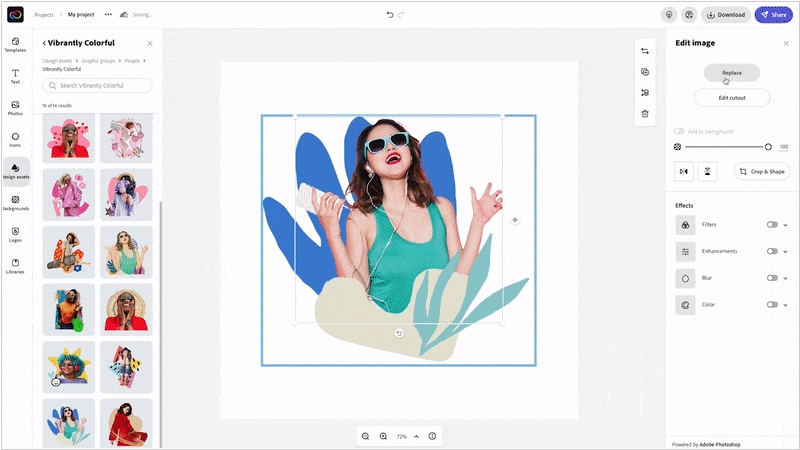
Adobe has launched Creative Cloud Express, a mobile and web app that brings some of the best features of the company’s sprawling Creative Cloud Suite and Acrobat PDF tools into a single application to help users quickly create anything from social media posts to promotional posters and videos. Creative Cloud Express replaces Adobe Spark. Using a template-first approach with built-in access to stock images and other assets, Creative Cloud Express is meant to be far more accessible than the individual Creative Cloud apps. The app will come in both a free version and a paid $9.99/month edition with additional capabilities and a library of more complex templates. Access to the new application will also be included in Adobe’s Creative Cloud All Apps and flagship single-app plans.
2021. Upscaler - AI service that enlarges images without losing quality
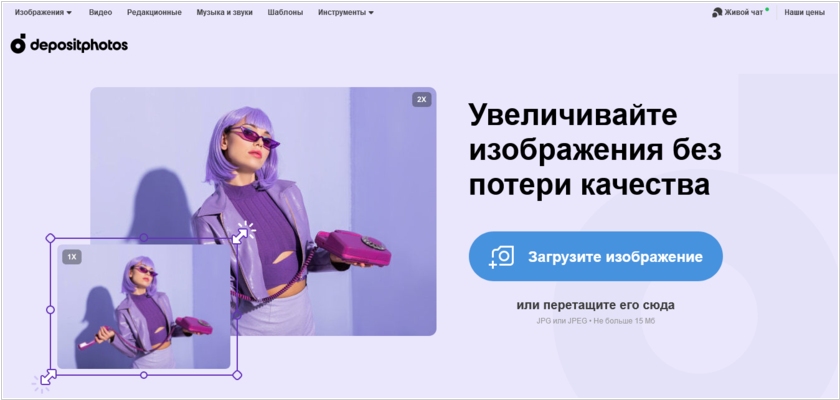
Sometimes you need to find an image for marketing purposes, but all you have are small, low-resolution ones. So, you have to do magic in Photoshop. The new tool - Upscaler (from the creators of Depositphotos) - allows to automatically upscale images without losing quality using a machine-trained neural network. The developers say the algorithm recognizes the image's content and, pixel by pixel, enlarges it to twice its original size. It's not that there's truly no loss of quality, but at least the noise (which typically appears when upscaling) is smoothed out, and the result is quite passable.
2019. Adobe Photoshop arrives on the iPad
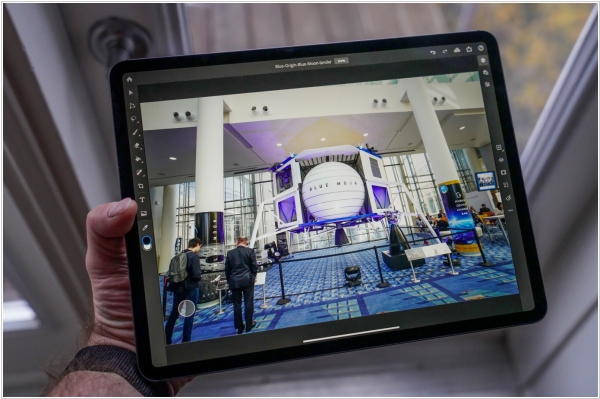
At last Adobe has released Photoshop for the iPad. It costs $9.99 per month for use of just the app, or included as part of an Adobe Creative Cloud subscription. This initial version of Photoshop for the iPad isn’t at feature-parity with its desktop editing software. It does, however, support Apple Pencil for iPad Pro and more recent iPad models, and it allows editing of PSD files. There are features like spot healing and clone stamp that can be highly useful for refining edits on the go available right now. A workflow that incorporates Lightroom on iPad can probably serve pros looking to maximize portability decently well, even if it can’t match the sheer range of things you can do on the desktop just yet. Plus, PSDs you store in Creative Cloud will be available to edit right where you left off everywhere.
2018. Google launched its Paint alternative
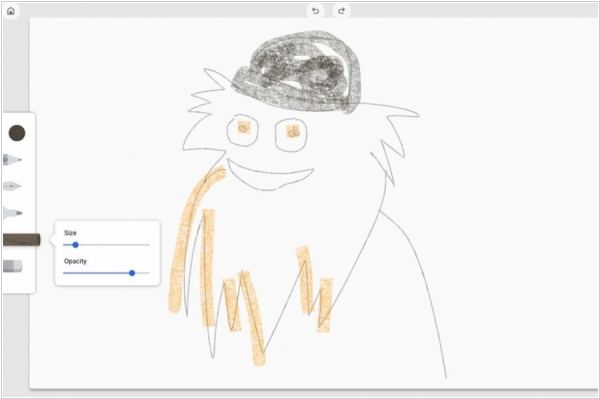
Google has released a simple online graphics editor, Google Canvas, which allows to quickly draw by hand (like in Paint - default program on Windows). It's free and available at canvas.apps.chrome. Despite the word "chrome" in the address, it can also be opened in other browsers, such as Firefox. Drawings can be saved to your computer as PNG images. You can also import saved images back into Canvas. The app works with both a mouse and a stylus on tablets. Canvas will likely soon join other online editors in Google Drive and G Suite.
2014. Photoshop to work on Chromebooks
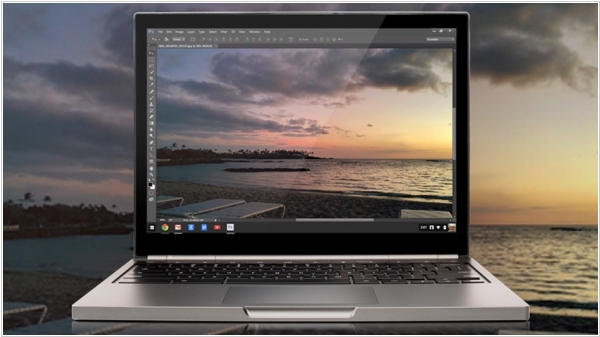
Critics of Chromebooks (laptops running Google's ChromeOS platform) have always said that nothing good will come of them because "desktop programs like Photoshop don't run on them." They'll soon have to come up with another example, because Photoshop will soon run on Chromebooks. Google and Adobe are collaborating to solve this problem. What's more, it will be a virtual version of Photoshop that isn't installed but rather "streamed" to the laptop over the internet. It will first be available for educational institutions, and then for everyone else. As a reminder, Adobe also offers an online version of Photoshop Express, though it's very limited in functionality. However, last week Adobe acquired the online graphics editor Aviary, so it seems the online version of Photoshop will soon become a fully functional tool.
2013. Adobe is moving to SaaS
Just recently, Adobe made the subscription for its design applications more attractive than one-time purchase. And today they have announced that subscription will remain the only option. There will no longer be a new version of Creative Suite (CS). Instead, there will be Adobe Creative Cloud (CC). Why are they doing this? The first reason is to reduce piracy. The second reason is that Adobe's design programs are becoming cloud services. No, they don't work in a browser yet. But they no longer just allow you to draw something, but also to organize work on a project from multiple computers or with the participation of several people (primarily, to organize interaction between the designer and the client). In addition, Adobe has integrated the service it acquired, Behance, into its cloud. This is an ecosystem in which designers can share media resources and find advice and inspiration, and clients can find contractors for their projects. Adobe Creative Cloud will cost $50/month. It includes Photoshop and all other Adobe design apps, plus 20 GB of cloud storage.
2011. Autodesk acquires Pixlr, takes on Adobe Photoshop
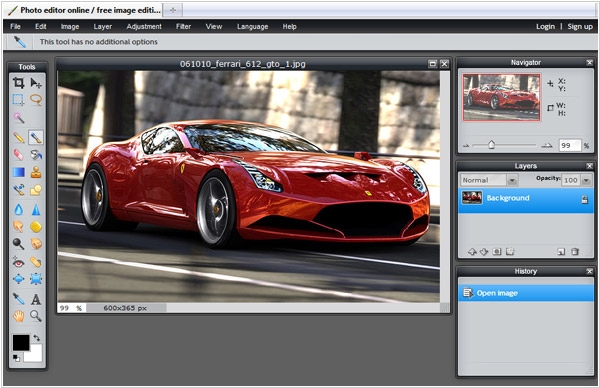
While Adobe is fighting with Apple and trying to sort out its SaaS-collaboration strategy, it can loose another niche - the online graphical design software. One of the main contenders - is Autodesk. Last week Autodesk, the maker of engineering design software acquired the best online Photoshop alternative - Pixlr. Some people might say that for the design software cloud technologies - are unnecessary, because they require first of all the speed and the rich interface of the desktop apps. But remember, the same thing people where saying about the cloud document editors. Like with the online document editors, the main advantage of online graphical editors - is collaborative features. For example, a designer needs to reconcile a template with a client, and an engineer needs to collaborate with the chief designer on a scheme. In such cases, the real-time collaborative editing is much more effective than sending file via email back-and-forth.
2008. Balsamiq Mockups - online service for interface design
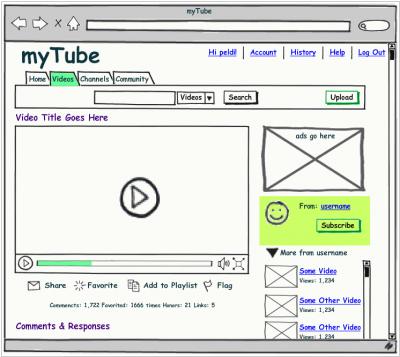
When creating a new website or web application, it's naturally a good idea to visualize how it will work and look. And typically, primary interface design is a job for a marketer who isn't particularly familiar with design software. Balsamiq Mockups is a convenient web service for such things. It offers a large library of various interface elements (browser windows, bookmarks, forms, scrollbars, buttons, webcam thumbnails, etc.). All elements are designed in a sketch style, creating a hand-drawn feel. Everything is very easy to edit, position, move, and group - much more convenient than Photoshop. In a couple of minutes, you can create an interface like the one above. Once the interface is ready, it can be saved as an image or exported to XML, which is convenient for further development.
2008. Adobe Photoshop now has a free web version
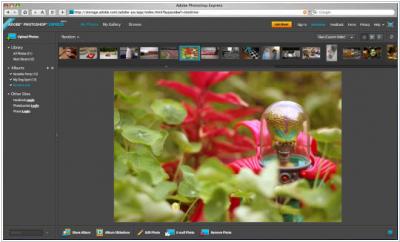
Adobe's web services aren't really used for any useful functions - they're just nice to look at. The new Photoshop Express, which has been released this week, is totally aligned in this trend. And its launch isn't so much important for the SaaS market as it confirms the general trend of Adobe services – yet another useless service that doesn't even come close to delivering the capabilities of regular Photoshop. All it offers is 2 GB of storage space for photos. One can only hope that this is all a PR stunt ahead of the arrival of truly killer apps from Adobe (or based on Adobe technologies) that will turn the web app market upside down.