Top 10 Version Control Systems for Eastern Europe
Updated: 02.06.2026
Some of the most popular Version Control Systems are mentioned below.
Users that searched for Top 10 Version Control Systems for Eastern Europe then also viewed the following software:
See also: Top 10: Project Management Software for Eastern Europe
Users that searched for Top 10 Version Control Systems for Eastern Europe then also viewed the following software:
See also: Top 10: Project Management Software for Eastern Europe
2026. GitHub Adds Custom Fields for Issue Tracking
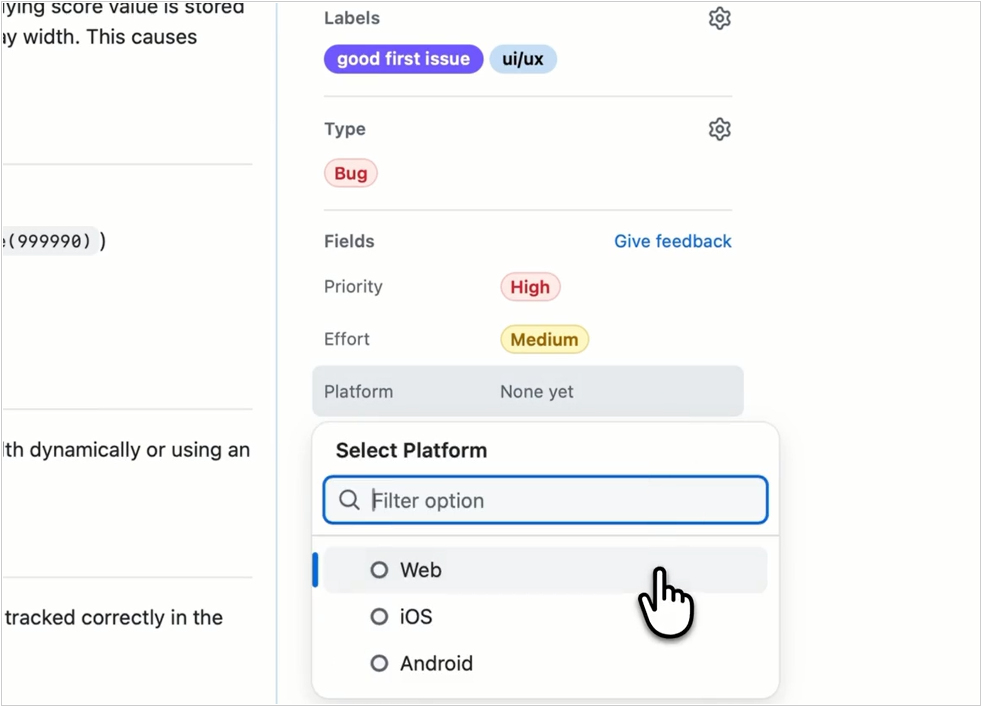
GitHub now supports custom fields in issues and bugs, accessible both in the interface and through the API and Actions. Previously, users could only use labels, but these lacked types, validation, cross-repository consistency, and reporting capabilities. Custom fields can be configured by type (single selection, text, number, and date), filter lists, search by content, assign fields to issue types, and generate reports. You can even track who changed which field and when. By default, each organization receives four pre-configured fields assigned to the appropriate issue types: priority, effort, start date, and target date. Up to 25 fields can be created.
2024. Jujutsu - new version control system
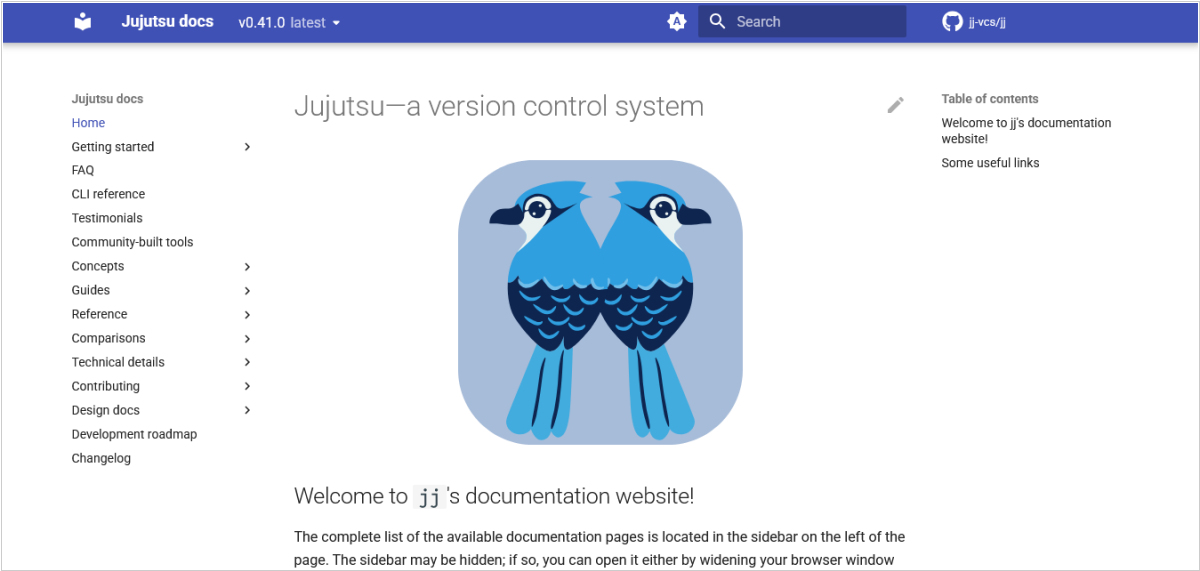
It would seem that who needs a new version control system when we already have Git, Mercurial, SVN, Perforce, and Darcs? But Google developer Martin von Zweigbergk believes there is still room for improvement in this area - he created a new VCS - Jujutsu. It is compatible with Git, but its main difference from Git is that the commit history is a sequence of patches, not snapshots. The idea is borrowed from Darcs. This approach makes it easy to rewrite the commit history, rebasing becomes trivial, commits (patches) can be safely moved between branches, and there are fewer conflicts (automatic conflict resolution works better than in Git or Mercurial). For example, you have a commit history, but one commit "Create file A" should not be in the history. The Jujutsu approach is to rebase all commits after the "bad" one onto the "Initial commit." All changes in the repository can be rolled back: there's both a simple Undo and a full history of your actions on the repository.
2024. GitHub Adds AI-Powered Code Reviewer
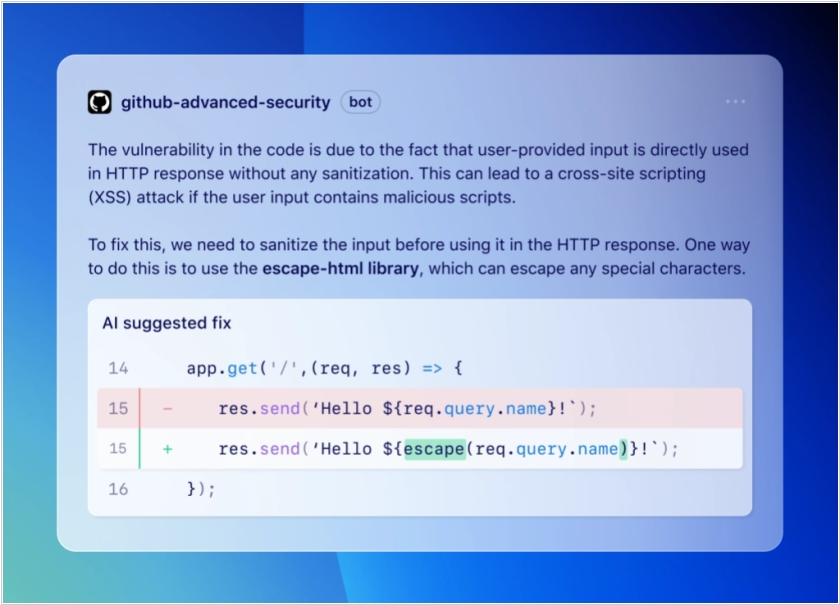
GitHub, the version control platform, has launched a new automated code scanning feature to detect and fix security vulnerabilities as you write code. This new feature combines the real-time capabilities of GitHub Copilot with CodeQL, a semantic code analysis engine. GitHub promises that this new system will be able to resolve more than two-thirds of detected vulnerabilities – often without requiring developers to edit the code themselves. The company also promises that automatic code scanning fixes will cover more than 90% of alert types in supported languages, which currently include JavaScript, Typescript, Java, and Python. GitHub believes that this feature allows developers to focus on more complex tasks rather than wasting time on routine bug fixes.
2006. Trac - web-based bug-tracker with wiki + svn code browser
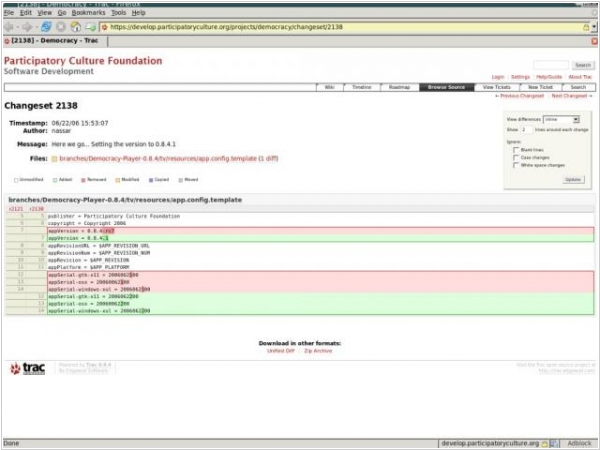
Trac is a new entrant to the issue tracking space. It's a nice web-based project management tool written in Python. It integrates with existing Subversion repositories; for example, you can browse the code in your repositories with Trac (it'll be displayed syntax-highlighted), view diffs between revisions etc. etc. Additionally, you get a wiki (e.g. for project documentation), as well as a built-in bug-tracker a la Bugzilla, all integrated nicely into a single piece of software... It's Free Software, of course (the license changed from GPL to revised BSD somewhat recently)... You can get tons of useful plugins and macros over at trac-hacks.org for additional functionality, e.g. DoxygenPlugin, GanttPlugin, DebianBtsMacro, and many more.