Top 10 Cloud Collaboration Platforms for Eastern Europe
Updated: 11.06.2026
Some of the most popular online collaboration platforms are mentioned below.
Users that searched for Top 10 Cloud Collaboration Platforms for Eastern Europe then also viewed the following software:

See also: Top 10: Project Management Software for Eastern Europe
Users that searched for Top 10 Cloud Collaboration Platforms for Eastern Europe then also viewed the following software:
See also: Top 10: Project Management Software for Eastern Europe
2026. Trello gets unified Inbox
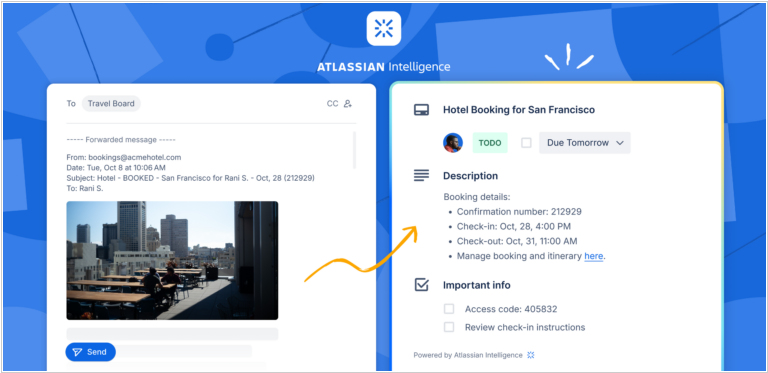
Project management and collaboration service Trello has unveiled new Inbox section, where you can collect tasks from Slack and Microsoft Teams messages, email (forward messages to inbox@app.trello.com), voice prompts on iOS like "Hey Siri, add 'Contact Alexa' to Trello," and notes added via the mobile widget on Android. The new AI function Trello Quick Capture analyzes forwarded messages from corporate messengers and email, extracts due dates and priorities, and adds these parameters to tasks. Another new feature, Trello Planner, allows you to plan your day by connecting your Google or Microsoft calendar. You can also drag and drop tasks from your Trello Inbox or boards directly into Planner.
2024. Meta is shutting down Workplace, its enterprise communications business
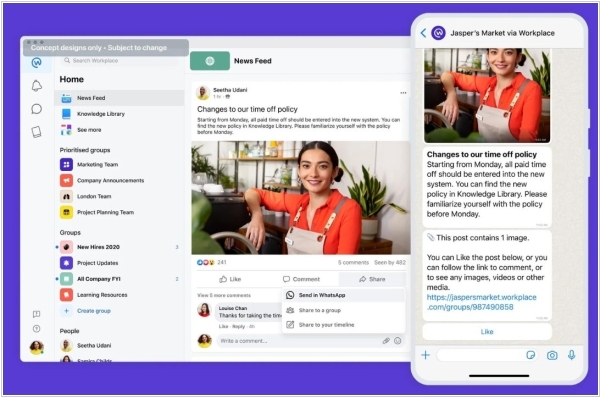
In a decision that seemed both inevitable and mildly perplexing—rather like the discovery that your towel has mysteriously disappeared from a perfectly ordinary pocket dimension—Meta has decided to bid farewell to Facebook Workplace, its plucky little business communication platform. The company, with the sort of optimism usually reserved for the moments before a disaster-prone starship launch, is now pivoting towards the infinitely buzzier realms of AI and the metaverse, which it insists will revolutionize work as we know it. Workplace will keep its lights on until September 2025, but for those feeling abandoned, Meta recommends embracing the newly Zoom-acquired Workvivo as a replacement—though, admittedly, Workplace’s revenues were never going to rival the ad-fueled billions from Facebook and Instagram. Still, it was a useful reminder that Meta's ambitions stretch far beyond cat memes and oversharing.
2020. Monday.com now lets companies build custom apps
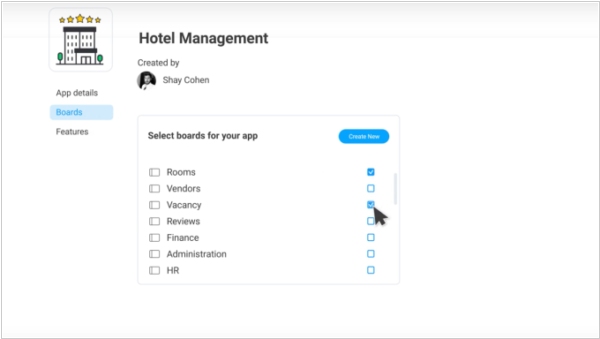
Monday.com, announced version 2.0 of its flexible workflow platform, making it easier for customers to build custom apps on top of Monday. The new release includes over a hundred prebuilt automation recipes and code-free custom-automations along with more than 50 integrations with other apps, allowing project managers to build fairly sophisticated workflows without coding. It’s process management, portfolio management, project management, CRM management, hotel management, R&D management. Monday is offering a code-free environment to take these building blocks and build custom applications to meet the needs of any organization or team.
2019. Slack integrates with email
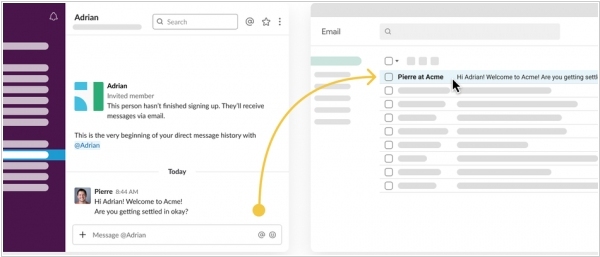
Slack's latest feature allows users to message coworkers via email. The feature, which will be rolling out over the next couple months, is meant to give people who don't use Slack a way to keep up with conversations their coworkers are having inside the messaging app. When they’re mentioned by username in channels or sent a direct message, Slack will route those messages into their email inbox so they don’t miss out on important information while they’re getting themselves set up. Initially, the Slack to email messages will only be one-way, meaning the recipient can view the conversation from their inbox but won't be able to respond directly. But Slack says it will eventually allow people to messages via email as well.
2017. Atlassian acquired project management service Trello
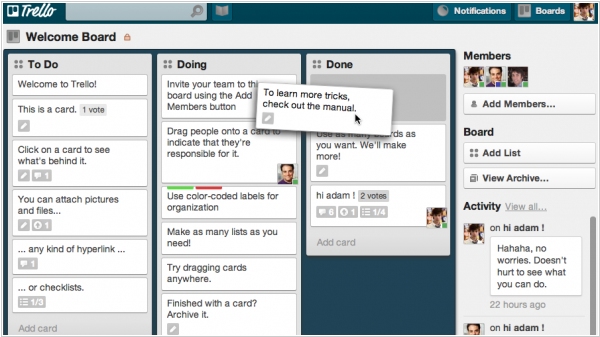
Altassian has acquired the popular project and work management service Trello for $425 million. It is known for its Kanban approach to project management. All tasks are presented as cards on the desktop, sorted into columns by status (to-do, in progress, done, etc.). This makes it easy to assess the overall project picture at a glance. Trello currently has 19 million users. As a result of the deal, Trello will retain its brand and functionality and will be integrated into Atlassian's product stack (which primarily focuses on software and design firms). This includes the JIRA issue tracker, the HipChat group chat, the Confluence document collaboration service, and other applications.
2016. Evernote for Windows separates personal and business notebooks
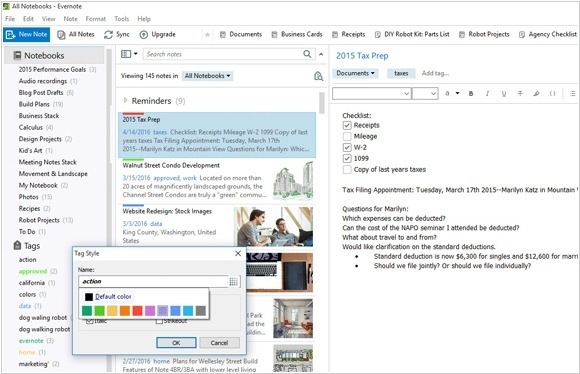
Evernote, the most popular note-taking service, has released an updated desktop app for Windows. Business users (who are arguably the app's primary users) can now separate personal and business notebooks and notes. Both types of notebooks are now logically separated in the left column and in search, preventing you from accidentally sharing personal information with colleagues. Additionally, the app features a refreshed interface, new notebook and tag management options in the left navigation column, smarter and faster search, and overall improved stability.
2015. Dropbox launches online note-taking and collaboration tool
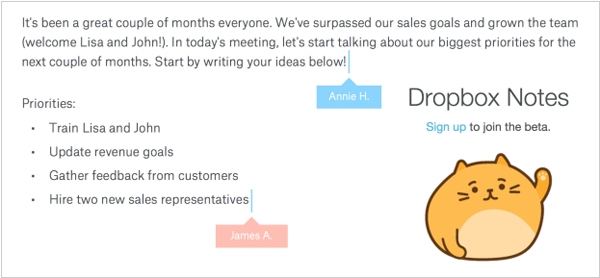
Dropbox has quietly launched a new service, Dropbox Notes. It's a simple text editor that lets you create notes (or simple documents) and save them to your online storage. You can format the text slightly, and add images and tables. Files and to-do lists can be attached to notes. You can also share pages with colleagues and collaborate on them in real time. You can see who else is editing the page and where their cursor is. Of course, this editor isn't intended to compete with Word; it's designed for simple collaboration. Especially since Dropbox recently gained full integration with Microsoft Office.
2014. Teamlab opens source code and changes name to ONLYOFFICE
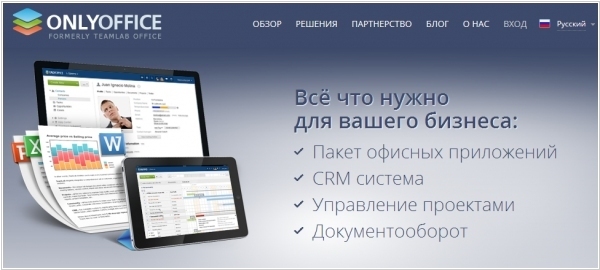
Teamlab, the collaboration service, has always dreamed of becoming Office—ever since it launched its own online office document editor. It's really quite good, and that's what Teamlab decided to focus on. At one point, they even changed their name to Teamlab Office. But even that wasn't enough. Yesterday (in honor of its 4th birthday), Teamlab was renamed to ONLYOFFICE. Although, as you can see from the website's main page, the developers don't hide the fact that, in addition to Office, the service includes CRM, project management tools, and document management. In addition to renaming, the developers decided to completely open-source the service. They say it's so users can be confident in the product's security. So now, if you want to install ONLYOFFICE on your own server, you can do so completely free of charge.
2013. Box offers 10GB of free storage and low-cost version for SMB
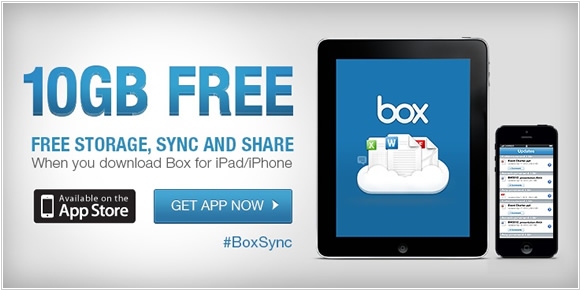
The developers of the file collaboration service Box are simply amazing. Typically, startups like Box, having achieved great success (180,000 corporate clients) and signed up corporations like Procter & Gamble, Eli Lilly, EA, and NBC Sports, forget about individual users (freeloaders) and small businesses and focus on big money. But Box doesn't forget. They recently increased the cloud storage limit to 10 GB for single-user accounts and added a low-cost version for small businesses: 100 GB for $5/month/user. That's about half the price of, say, Dropbox. It's important to remember that Box isn't just online storage, but a collaboration system with access control, comments, tasks, version history, file synchronization between devices, mobile access, and online editors.
2012. 200,000 Toyota Employees Will Use Office 365

Though Microsoft is positioning its Office 365 as a solution for small business, it has nothing to do but to offer it to large companies also. Because they also want SaaS. After Google won the deal with General Motors (to implement Google Apps), Microsoft needed the similar victory. And they did it - Toyota will provide its 200,000 employees based in Japan and other overseas affiliates with Office 365. They'll be able to use not only online document editors, but also the online version of Outook / Exchange, Lync, SharePoint. How much will Toyota pay for each license - is unknown. A few days ago Microsoft introduced the pricing for the new Office version, and there is no option for large enterprises. Office 365 Small Business Premium will cost $150/year per user (and this license covers up to 5 user devices). In general, the new Office pricing is difficult to understand (as usual), but one thing is clear - Microsoft made using the Office 365 subscription model more cheap than buying desktop licenses. Because they are already very tired of convincing users to upgrade every time. It's better to collect the small (but stable) fees for the SaaS-version.
2010. Acrobat.com added kind of shared workspaces
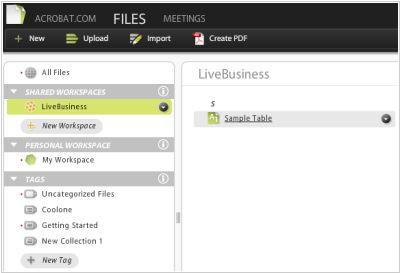
Now it's time for another portion of criticism towards the Acrobat.com online office. The last time we reviewed the service, they introduced many useful features, but now they are doing strange things again. Although the press release looks nice: Acrobat.com added online collaboration work-spaces. In fact, they added only shared folders were you can invite your co-workers / clients for file collaboration. Previously, it was possible to share only separate files. So there is more PR than improvements made during several months. Besides Adobe decided that online shared folders - it is so demanded tool on the market that they can make money on it. Although the cost of service was not risen, but the free version allows to create only one workspace (shared folder), and the Premium Basic plan (which costs $15/month) - is limited to 20 shared folders. In addition (very odd) you can't access shared folders on your mobile device (Blackberry and iPhone).
2009. Zoho isn't afraid of Google, it's using it
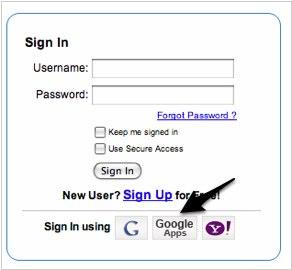
Less than a month after Google launched the Google Apps OpenID authentication system, Zoho has already adopted it and now allows users to log into their services using their corporate email address (managed by Google Apps). It might seem counterintuitive to offer companies that already subscribe to Google Apps the opportunity to use Zoho's alternative services. But Zoho has a broader vision. Zoho's thought leader, Raji Vegesna, explains that Zoho excels not only in quality but also in quantity. While the public often perceives Zoho Suite and Google Apps as competitors in the same niche, in reality, they only have four apps with overlapping functionality. Meanwhile, the total number of Zoho Suite apps already numbers nearly 20, and the company makes its money not from email or online editors, but from its CRM and project management system (which Google Apps doesn't have and doesn't even plan to offer). Interestingly, Zoho, an evangelist for open internet technologies, hasn't yet implemented OpenID authentication, but they quickly implemented Google's alternative system.
2008. Microsoft Online Services to take on Google Apps
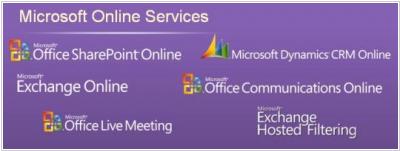
Microsoft has revealed details of the upcoming release of Microsoft Online Services suite. This service will be a direct competitor to Google Apps and, very likely, a stronger competitor. The service will be available in two versions: 1 - Business Productivity Suite, priced at $15 per user per month, will include Exchange Online (mail, contacts, organizer), SharePoint Online (portal, document management), Office Communications Online (messenger and VoIP), and Office Live Meeting (web conferencing). All components are as functional as their desktop counterparts. 2 - Deskless Worker Suite, priced at $3 per user per month, will include Exchange Online and read-only access to SharePoint Online. Microsoft Online Services will be implemented using the S+S (Software + Service) concept. That is, access to online data can be implemented in Microsoft desktop products. For example, document editing is done in MS Office desktop, while email and calendar information can be viewed in the standard Outlook desktop. Close integration with Dynamics CRM is also promised.
2007. Hotmail founder launches online office suite
The online office suite Google Apps now has a competitor. InstaColl, an India-based company, has introduced a new service, Live Documents, which allows users to work with documents and spreadsheets online. InstaColl, which has approximately 30 employees, was founded by Saber Bhatia, the creator of the Hotmail email service, which was acquired by Microsoft ten years ago. Bhatia emphasizes that compared to other similar services, primarily Google Apps, Live Documents has one very important advantage: its interface is similar to that of Microsoft Office. Therefore, users accustomed to working with Microsoft Office will have no difficulty switching to Live Documents. Live Documents is free for private users. Each subscriber receives 100 MB of disk space on an online server for storing documents. Key features of Live Documents include support for collaborative collaboration and built-in privacy features.
2007. GoPlan - Basecamp's new competitor
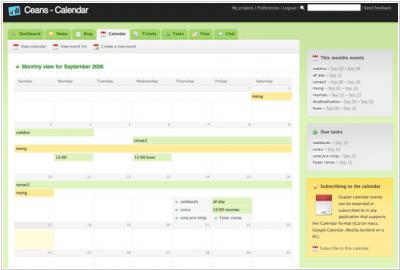
WeBreakStuff has released a project management system called GoPlan, which is positioned as a competitor to Basecamp and ActiveCollab. GoPlan is similar to Basecamp and ActiveCollab in many ways. Both are web-based. However, GoPlan and Basecamp are commercial services (built in Ruby), while the less functional ActiveCollab is open source (written in PHP). GoPlan features modules for collaborative memo editing, calendaring (export to iCal), task management, to-do tracking, file management, and a built-in chat (with SSL support). A distinctive feature of the interface is the ability to disable unnecessary modules to prevent them from becoming an eyesore and hindering navigation. GoPlan and Basecamp pricing varies widely, from a free version to plans of $100 and $150 per month, respectively. Basic functionality costs $20 and $24 per month. The free version of GoPlan lacks a calendar and chat, but for $10 per month you can get full functionality for up to a dozen projects with eight participants each.
2003. IBM announced new IBM Lotus Workplace products
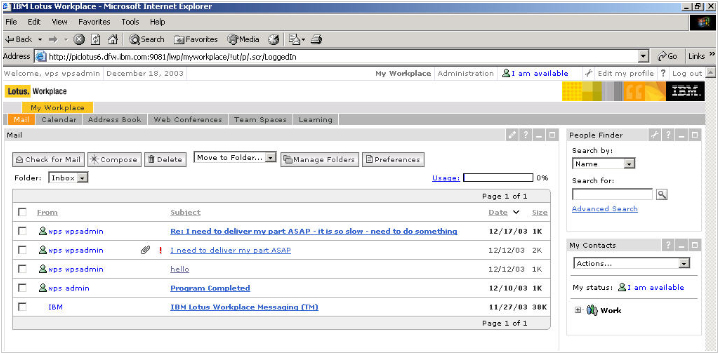
IBM has announced new software products in the Lotus Workplace family (including email, instant messaging, and web conferencing). IBM Lotus Workplace Messaging 1.1 is designed for messaging and easily integrates with various similar infrastructures, including IBM Lotus Domino. IBM Lotus Workplace Team Collaboration 1.1 combines web conferencing tools with asynchronous workspace tools. IBM Lotus Workplace Collaborative Learning 1.1 is a learning management system that helps optimize the management of corporate educational programs. IBM Lotus Workplace Web Content Management 1.1 allows customers to create, publish, archive, and manage web content on an Internet server, as well as in a corporate intranet and extranet environment.