
Top 10 Cloud Video Conferencing Platforms for Eastern Europe
Updated: 13.06.2026
Some of the most popular cloud-based video conferencing platforms are mentioned below.
Users that searched for Top 10 Cloud Video Conferencing Platforms for Eastern Europe then also viewed the following software:

See also: Top 10: Video Meeting Platforms for Eastern Europe
Users that searched for Top 10 Cloud Video Conferencing Platforms for Eastern Europe then also viewed the following software:
See also: Top 10: Video Meeting Platforms for Eastern Europe
2026. Microsoft Teams now allows to control the size of shared content

Microsoft Teams has added several new features. In group video calls, you can now drag the window divider between the shared content and the participants' video feed tiles to adjust the size of each element. The developers have also simplified the app bar; in particular, labels are now hidden by default to reduce distraction for meeting participants. You can now filter Teams chats by @name. Teams now automatically detects the spoken language of each speaker and updates it in real time as the conversation unfolds (manually selecting the spoken language will no longer be possible). Microsoft 365 Copilot can now answer incoming calls in Teams and schedule follow-up meetings, allowing you to spend less time on routine tasks.
2024. Microsoft to remove Teams from Office enterprise subscriptions in Europe
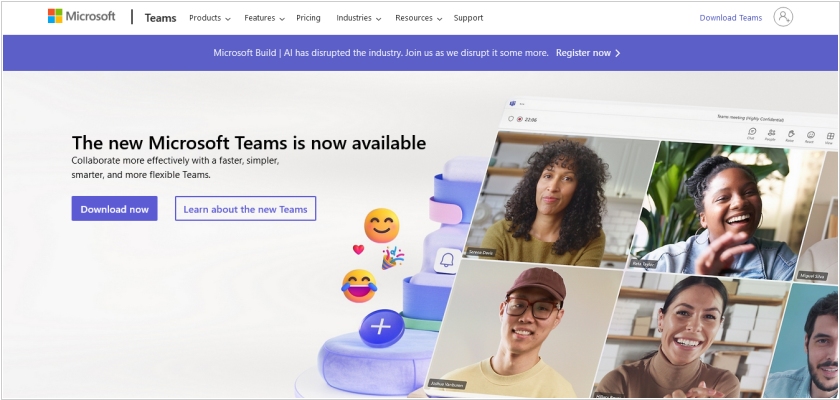
Microsoft will begin selling its corporate messaging app Teams separately from its Office productivity suite worldwide. This comes six months after the company separated the two products in Europe (to avoid a potential antitrust fine from the EU). Customers who received Teams as part of their Microsoft 365 and Office 365 plans can continue to use those plans or switch to plans without Teams. Microsoft 365 offerings for small and medium businesses will include both Teams-equipped and Teams-free options. Consumers and academic license holders will not be affected by this change.
2024. ONLYOFFICE integrated with Zoom
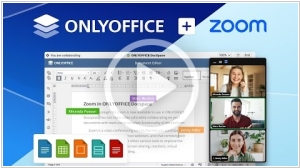
Online office ONLYOFFICE has released an app for the Zoom marketplace that integrates the office suite with video conferencing. Specifically, the app provides access to text documents, spreadsheets, presentation slides, and PDFs during Zoom online meetings. Collaborative editing, discussion, and brainstorming are also possible in real time. Meeting participants can be granted various access rights to view or edit documents.
2023. Google Meet can now detect hand raising.

Raising your hand is a popular feature in video conferencing systems, but Google was the first to implement it not by pressing a button, but by actually raising your hand (as in a real meeting). In Google Meet, auto-detection of this gesture is not enabled by default. You must enable it by selecting "Advanced settings" > "Reactions" > "Raise hand gesture." For the feature to work reliably, your hand must be visible to the camera and held away from your face and body. Keep your hand raised until the hand-raise detection icon turns green. Administrators have no control over this feature, so they won't be able to turn it on or off.
2021. Google Meet now features smart zoom and background replacement

Google has released an update to its video conferencing service Google Meet, which will be released in May. It will finally feature the ability to change your background so colleagues can hide your clutter. However, for now, only three backgrounds will be available: a classroom, a forest, and a party. The new version will also automatically zoom in on the most active participants. The bottom panel of the meeting will be more convenient. Chat, attachments, and the participant list will be located at the bottom, making room for video, and the end call button will be moved further away from the camera and microphone buttons to prevent accidental clicks. Furthermore, the update will allow you to hide your video feed from the screen and unpin a presentation so it matches the video tiles of the conference participants.

2018. Polycom launches cloud services for enterprise clients
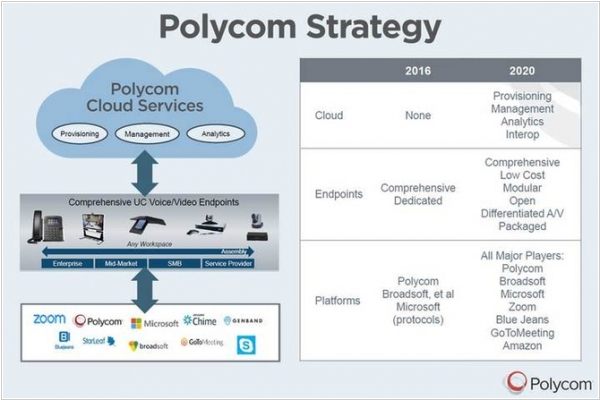
Videoconferencing giant Polycom has introduced cloud services for corporate clients. Polycom Cloud Services includes PDMS (Polycom Device Management Service), designed for managing videoconferencing equipment, monitoring its performance, and troubleshooting issues. With PDMS, clients can create, update, and secure tens of thousands of telephone systems used in offices and conference rooms. Currently, PDMS is available only for audio devices. The manufacturer promises to support videoconferencing equipment by the end of the year.
2017. Amazon launched Skype for Business alternative

Amazon launched Chime, a video-conferencing service that will compete with Skype for Business and WebEx. Chime is provided by Amazon Web Services, the cloud-computing and storage division that makes up a big chunk of Amazon's business. The online meeting tool lets users switch between Mac, Windows, iOS and Android devices to use video-conferencing, screen-sharing, file-sharing and a chat feature. Chime costs $2.50 per month per user for a plan with screen sharing and use of a corporate directory, and $15 per month per user for a full plan that offers video meetings for up to 100 people — the version most businesses will need. A basic plan that allows video calls for two people and chat features is free. Since Chime is provided by the security-focused Amazon Web Services, the video-conferencing tool encrypts all communications and doesn't store chat history.
2015. Cisco Enters Cloud Video Conferencing Market

Cisco entered the market of cloud solutions for organizing video conferencing with the launch of a system for organizing video and telephone conferences Cisco Spark, deployed on the corporation's own cloud infrastructure. In the future, it is possible that Spark will be hosted in partner data centers. Cisco Spark is software for collaboration between company employees. The application allows you to exchange messages, images and documents, as well as make video calls using your smartphone camera. The functionality of the system allows, for example, to communicate via corporate telephone communications using the home Internet, and conferences can be organized using equipment from different manufacturers. Cisco has decided to focus on the cloud, but there are no plans to stop producing traditional phones and videoconferencing.
2014. Polycom offers virtual conference room subscription

Polycom has launched its RealPresenceOne video collaboration system as a subscription service, making it even easier for companies to implement collaboration tools. Polycom RealPresenceOne allows businesses to choose the most appropriate video collaboration option, including hybrid and on-premises solutions that perfectly fit their business models and budgets. Costing less than $1 per user per day, it's ideal for customers new to audio, video, and content collaboration.
2011. Salesforce acquired web-conferencing service DimDim

Salesforce has announced the acquisition of Indian web-conferencing service DimDim for $31 million. It's very appropriate acquisition for Salesforce. The company wants to dominate on the collaboration market with its social collaboration system Chatter. And web-conferencing and video conferencing (provided DimDim) - are the necessary collaboration components. Besides, DimDim can be used as a solution for online presentations and remote support, built into Salesforce Sales Cloud and Service Cloud. The only thing that seems inappropriate - is difference in business approach of these two companies. DimDim is known for its freemium open-source model, that was very annoying for the key market players - Webex, GoToMeeting, Adobe Connect. Salesforce, on the other hand, likes to count money and provide something for free only having counted the profit. Therefore, it's not surprising that immediately after the announcement the free SaaS and open-source versions of DimDim have disappeared from the site. And those users who are already using the free SaaS version - can continue using it only until March 15, 2011. The open-source DimDim version can still be found on Sourceforge.
2001. NEC launches online video conferencing service
NEC, a Japanese computer and electronics manufacturer, has launched a new videoconferencing service for Biglobe Internet subscribers accessing the internet via ADSL lines. The new service, called Vchat Personal, is based on software developed by Japan Media System. To use it, you need a headset and a video camera connected to a PC via USB. Vchat users can communicate in real time with up to 10 computers simultaneously connected. The software for this service costs $163. Subscribers will also have to pay approximately $35 per month in addition to the standard subscription fee.