VR Video Conferencing Platforms for Business
Updated: 29.05.2026
Some of the most popular Virtual Reality Meeting platforms are mentioned below.
Users that searched for VR Video Conferencing Platforms for Business then also viewed the following software:

See also: Top 10: Video Meeting Platforms for Eastern Europe
Users that searched for VR Video Conferencing Platforms for Business then also viewed the following software:
See also: Top 10: Video Meeting Platforms for Eastern Europe
2024. Microsoft integrated mixed reality platform into Teams
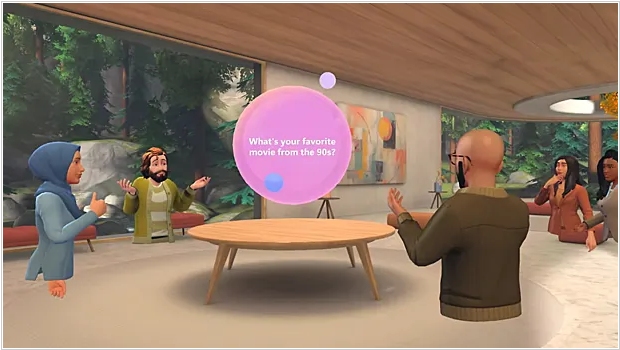
Microsoft has integrated its Mesh mixed reality platform into the business version of Teams. It features virtual meeting spaces accessible with or without a VR headset, allowing users to participate in immersive 3D meetings. While Mesh 3D meetings work best with a VR headset, Microsoft currently supports only Meta Quest* devices. The integration brings customized 3D environments to Teams, reminiscent of the enterprise version of AltspaceVR, a social VR platform acquired by Microsoft in 2017. Participants can enjoy spatial audio features that simulate private conversations while distancing themselves from others in the virtual space. 3D environments offer customization options, including interactive activities like bean bag tosses and icebreaker questions for remote colleagues. Creating your own immersive spaces requires a Teams Premium license.
2021. Facebook launched VR work meeting platform Horizon Workrooms
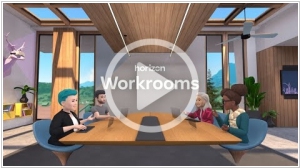
Facebook has launched Horizon Workrooms - a virtual meeting space that you can connect to with the Oculus Quest 2 VR headset and appear as a cartoon avatar. The avatar can be customized, just like in The Sims. You can also connect from a regular computer via video call. You can customize the virtual room to suit your needs, communicate, and work with documents, a whiteboard, and applications. File sharing, calendar integration, and chat are available. Mixed reality mode is also supported. You can bring your desk, computer, and keyboard and use them as usual while in virtual reality. The service is available for free in countries where Oculus Quest 2 is supported.
2020. Facebook showed VR workplace of the future with avatars
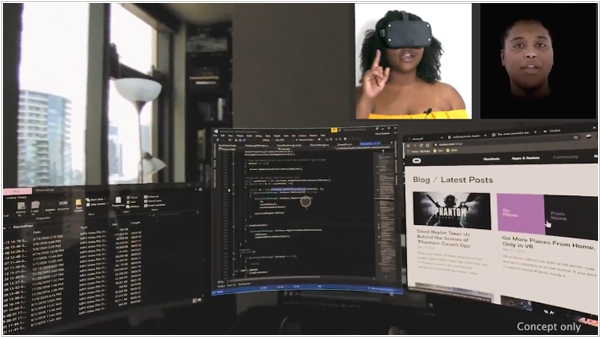
While Facebook's $2.3 billion acquisition of Oculus in 2014 hasn't delivered the expected returns, the company is constantly coming up with new ways to immerse both consumers and businesses in virtual reality. They recently unveiled a concept for a future workplace based on virtual and augmented reality. In the demo video, a person wearing a VR headset uses a regular keyboard to input data on virtual displays and controls them with gestures. But the most exciting new invention is codec avatars. They allow users to emulate real faces and communicate normally via video call (or in a virtual 3D world), even though all participants are currently wearing VR headsets.
2020. Tired of video calls? HTC launched virtual world for online meetings

About 10 years ago, virtual worlds for business were booming, following the popularity of Second Life. IBM, Sun, Nortel, and many startups tried to move business meetings into virtual classrooms. But the idea didn't take off. Now that remote work has become a necessity, and many are growing tired of constant video conferences, HTC thought it might be time to try again. Perhaps now is the time for companies to find something interesting and engaging to engage employees. So they launched the online platform Vive Sync. It lets you create a realistic 3D avatar from a selfie and participate in 3D meetings for up to 30 people, sharing documents and presentations. The service will be free until the end of 2020.
2017. Facebook launched the virtual reality social network Spaces

Three years ago, Facebook acquired the virtual reality headset maker Oculus Rift. Now it becomes clear why. They recently launched a beta version of the social network Facebook Spaces, where VR headset owners can hold virtual meetings. Of course, we're primarily interested in how this will be used for business. Unlike the virtual world of Second Life, which was actively used by businesses 10 years ago, Facebook Spaces allows for meetings within 360-degree videos and better conveys emotions and gestures (using controllers). Presentations and business meetings in such a virtual environment will likely soon become fashionable. And travel and real estate companies will likely completely change the way they do business. But that's assuming VR headsets become cheap and widespread enough.
2009. IBM unveiled virtual 3D world
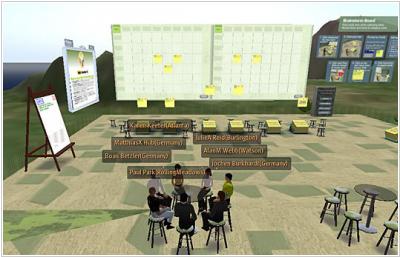
At the Enterprise 2.0 conference, IBM has unveiled a virtual 3D world for business meetings. What's more, it implemented this virtual world in a truly smart way – by integrating it into its corporate instant messaging service, Sametime. Now, to chat with a colleague in the virtual world, you need to select them from your contact list and invite them to your virtual office Sametime 3D. Unlike Second Life, IBM's virtual world doesn't feature exotic islands or nightclubs. Instead, it does feature giant calendars and flipcharts for collaboration. And all the 3D avatars wear suits and ties.
2009. Nortel's virtual world gets e-learning system
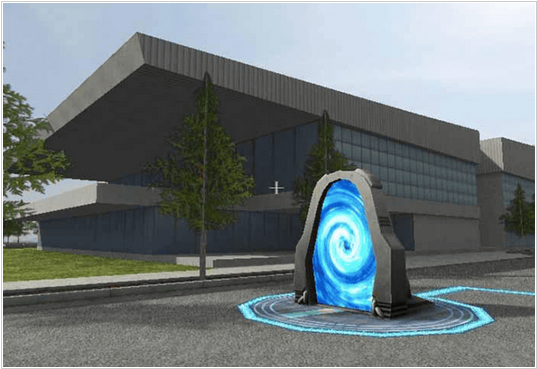
Nortel and Virtual Heroes announced a partnership to expand training and simulation capabilities in the 3D virtual world for businesses web.alive. Virtual Heroes is a leading company in the market for advanced training technologies and develops interactive collaboration and training solutions for corporate users. Nortel's web.alive application is a browser-based enterprise-class collaboration application with an interactive, integrated web interface with support for surround sound and 3D graphics. Its use enables more effective collaboration between company employees and interaction with customers online in real time. The implementation of the web.alive application takes collaboration, virtual training, and e-commerce to a qualitatively new level.