Top 10 Video Calling apps for iPhone
Updated: 08.06.2026
Some of the most popular video calling apps for iPhone are mentioned below.
Users that searched for Top 10 Video Calling apps for iPhone then also viewed the following software:

See also: Top 10: Video Meeting Platforms for Eastern Europe
Users that searched for Top 10 Video Calling apps for iPhone then also viewed the following software:
See also: Top 10: Video Meeting Platforms for Eastern Europe
2024. Google Meet added ability to switch from desktop to phone during video call
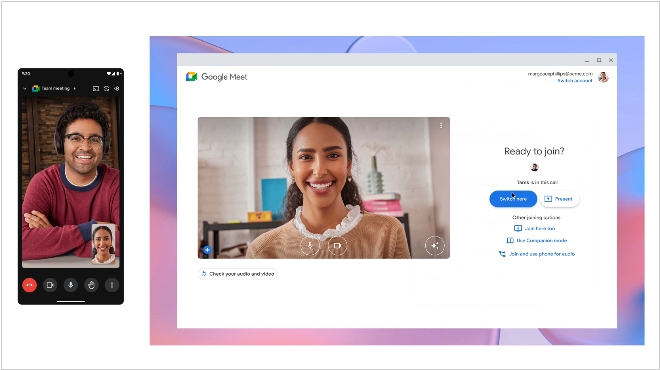
Google announced an update to its video conferencing platform Google Meet that allows users to switch devices during a call without interrupting the video call. Essentially, this allows users to seamlessly switch between desktop and mobile devices without other video conference participants being aware. Google Meet users will even be able to continue the call on both devices by going to "More Join Options" and selecting "Join Here Too." This feature works on desktop computers, as well as Android and iOS devices, such as smartphones and tablets. With this update, Google Meet adds a feature to its platform that has been available on Zoom for at least several years.
2022. MyChat for iPhone adds voice and video calls
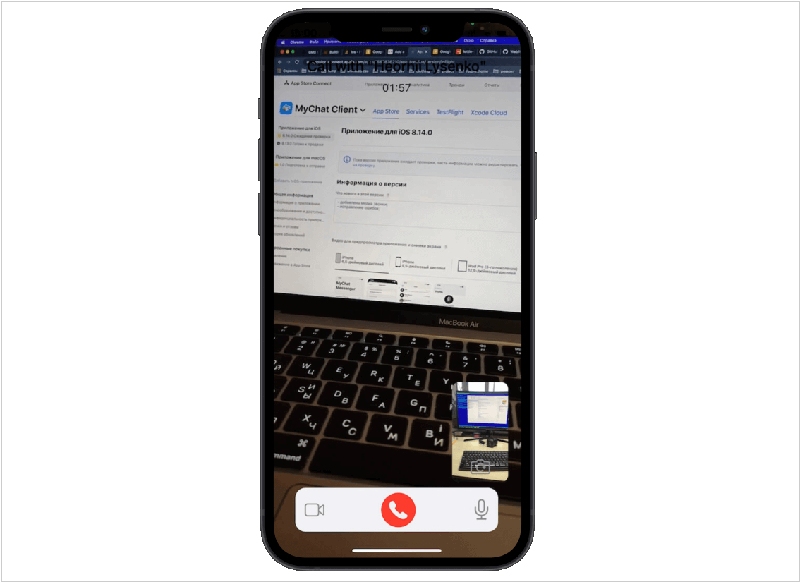
Calls and video calls are now available in the MyChat app for iOS. As usual, everything is controlled by permissions; you can call from iPhone to Windows, Linux, Android, or a browser, and vice versa. Furthermore, the app can now be quickly installed without specifying the server address or your username/password, directly from the MyChat Client for Windows or from your server's web lobby by photographing the QR code. The new version also adds the ability to add a custom menu to the MyChat Client for Windows, selectively delete private conversation history, and send files from Telegram to MyChat. Furthermore, the developers have improved support for Asterisk servers.
2020. Telegram launches video calls in its iOS app

Telegram has released an update to version 6.3 for its Android and iOS apps. Among other features, the iOS app now features video calls. Currently, these features are in test mode. Telegram announced plans to launch video calls in April 2020 amid the increased popularity of video conferencing services due to self-isolation. The team promised to add the feature by the end of the year.
2016. Google launched the mobile video messenger Duo.
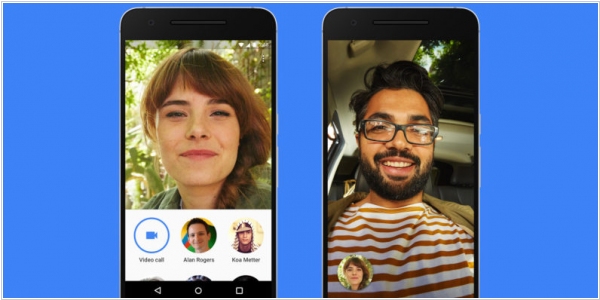
Google has decided to take the messaging market by brute force. Google Chat, Hangouts, Spaces, the announced Allo, and Google's Android SMS have now been joined by another app: Duo. It's positioned as the easiest way to have one-on-one video calls for Android and iPhone users. You don't need a Google account to register; a phone number is enough. Duo's unique feature is that you can see the caller's video before accepting the call, allowing you to mentally prepare for the conversation or decline. Duo also boasts full traffic encryption, automatic connection quality adjustment based on internet speed, and automatic switching between Wi-Fi and 3G.
2015. Facebook Messenger gets free video calls

Facebook Messenger has launched free VOIP video calling over cellular and wifi connections on iOS and Android in the U.S., Canada, UK, and 15 other countries. Facebook’s goal is to connect people face to face no matter where they are or what mobile connection they have. With Messenger, someone on a new iPhone with strong LTE in San Francisco could video chat with someone on a low-end Android with a few bars of 3G in Nigeria. Facebook first introduced desktop video calling in partnership with Skype in 2011, but eventually built its own video call infrastructure. Bringing it to mobile could Messenger a serious competitor to iOS-only FaceTime, clunky Skype, and less-ubiquitous Google Hangouts.
2012. Google+ Hangouts comes to iPad and iPhone
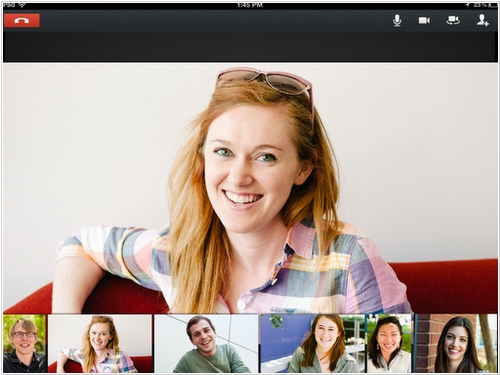
It's very strange that Apple doesn't really try to become the video chat king, and even doesn't prevent the competitors of using its platform for this matter. Though it was Apple's iPhone that made mobile video chat popular and Skype position not so strong. But since then Apple's video chat app Facetime didn't progress, and competitors continue to use it. Yesterday Google released a new Google+ app for iPad with Hangouts video chat and updated Google+ for iPhone app, that now also supports Hangouts. Recall, Google Hangouts allows you to organize online video meetings with up to 10 users - for free. In addition to iOS, Google's video chat works on Android smartphones and tablets, as well as on any computer via a web browser and a small plug-in.
2012. Polycom video conferencing is available on Android, iPad, and iPhone.

Polycom, a global video conferencing leader, has finally added support for the most popular mobile devices in business: Android tablets and iPads, as well as iPhones. Tablet support was added a little earlier (at the end of last year), and just today the iPhone 4S was added to the list of supported devices. In addition to video conferencing, employees can also exchange messages and share documents. The Polycom mobile app is part of the Polycom RealPresence line, which also includes solutions for computers, desktop terminals, and equipment for video conference rooms. So, in companies using Polycom RealPresence, a mobile employee can communicate with a director in a video conference room via a smartphone.
2011. Polycom unveiled mobile video conferencing client for tablets
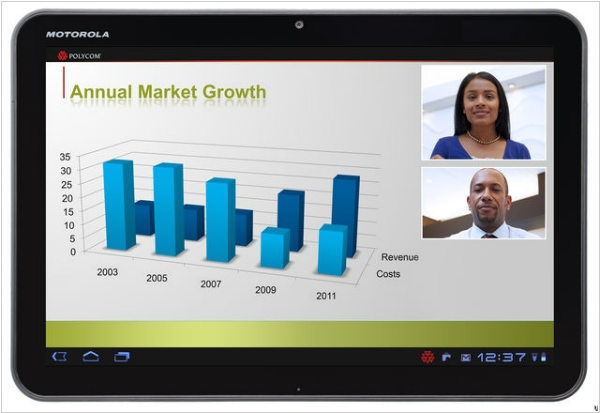
Polycom, a leading video conferencing company, has released a free mobile app Polycom RealPresence Mobile for Android and iOS platforms (or, more precisely, for tablets running these platforms). The app has currently been tested on the iPad 2, Motorola Xoom, and Samsung Galaxy Tab 10. Polycom RealPresence Mobile allows for video and audio communication outside the office (using open SIP and H.323 protocols), as well as viewing presentations and documents shared during online meetings. The app supports VPN access and can be integrated with a corporate user directory.
2011. Cisco Cius - enterprise tablet for videoconferencing
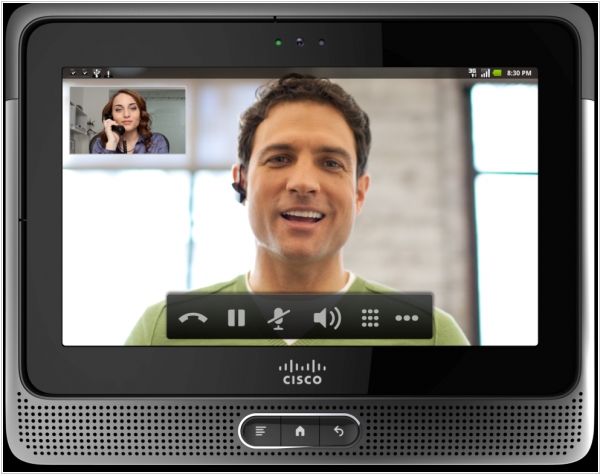
Cisco Cius was presented a year ago and then we expected that it will become a serious iPad competitor in the Enterprise market (because iPad at that time even didn't have a webcam). But unfortunately, Cisco - is a big and slow company. Official Cisco Cius sales launched only yesterday (before the tablet was used only by some Cisco customers). And the parameters of the device, which impressed us a year ago, no longer seem so stunning today. Cisco Cius works on Android, which saves the tablet from the main lack of its competitors (such as the Blackberry Playbook and HP TouchPad) - the lack of applications. However, the Android version in Cius is 2.2 (which was not adapted for the tablets). And its still unknown when it be upgraded to Android 3.0 Honeycomb. ***
2011. Skype vs Fring on iPad

Fring was one of the first who released a special messenger for the iPad when it appeared in 2010 and even tried to get people calling via iPad, as via the usual phone. And now Fring one of the first releasing the video chat for iPad 2, and at once with the group video support (fo 4 participants). The application provides the optimized picture quality, works over Wi-Fi and 3G, and can switch between the front and back cameras, but for now can't make SIP calls to regular phones. Also, recently the video showing Skype's video chat working on the iPad has leaked to the Web (see below). Unlike Fring, this application is still under development. But it's a good sign that after the acquisition by Microsoft, Skype continues to develop its apps for the competing (Apple) platforms.
2011. Fring is going crazy: group video calls for iPhone and Android

Thanks God, that there are such startups as Fring. Only thanks to them business technologies are going forward relatively quickly and IT giants like Skype begin to move ass faster and reduce their planning and development cycles that would usually take months and years. While most users still don't know how to make video calls using a smartphone, Fring is coming with group video chat for iPhone and Android (but only in the closed beta so far). Fring's group video call can support up to 4 people and you can see video streams of all participants on the display. Of course, its doubtful that this feature will become very popular in the near future and it will be possible to earn on it. But its exciting that such startup as Fring can afford to develop such innovations.
2011. Skype for iPhone adds video chat

This year we expect the great battle between Google and Skype for the mobile video chat market. Skype has made the first move - added the ability to make video calls to its mobile client Skype for iPhone. Unlike the iOS native video chat app Facetime (that works only on the iPhone 4), Skype video chat is available on iPhone 3G, iPad and iPod Touch. Video calls can be made over Wi-Fi and 3G. You can call from your smartphone to computer and vice versa. But the group video calls are not supported yet. Recall that in May 2010, Skype added video chat to Nokia N900. Besides, Skype's reps promised to release Android video-enabled app before the end of 2010, but (for unknown reasons) first video has been added to iPhone app first. For now video calls on the iPhone also provided by fring, Qik, Tango and Yahoo Messenger.
2010. Skype blocks Fring

As we have stated, mobile video calls are becoming the next big thing, and it seems, that Fring - is too small company to compete with such giants as Skype, Google and Apple in this market. Last week, Fring enabled making video calls on 3G for iPhone users. This new feature has become so popular that within a few hours after launch, Fring servers couldn't stand to load and Fring decided to temporarily disable support for Fring-to-Skype calls. In a few days Fring expanded its capacity, but Skype support has not been resumed. Today Fring blog has reported that Skype has blocked these calls and threatened to sue Fring. Quote from the blog: "They are afraid of open mobile communication. Cowards". ***
2010. Cisco Cius kicks iPad out of Enterprise market
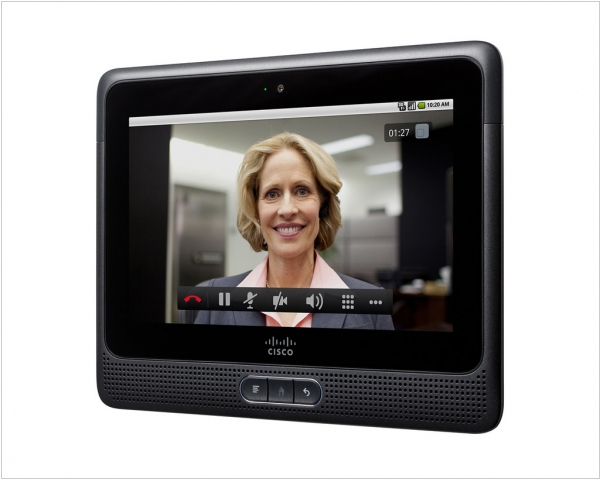
It's not a secret that the iPad has no camera, because Steve Jobs hopes to collect another $1K from his loyal customers for this feature in next version. And most likely, he would succeed in the consumer market, but the enterprise market is now a big question. Because mobile videoconferencing - is the main advantage of such tablets over netbooks and smartphones for business. And because today Cisco introduced its tablet Cisco Cius, targeted directly at web-conferencing and business video applications. First of all - Cisco business apps: Webex, Quad, Cisco Telepresence. But since the device is running Android OS - it is open for solutions from any vendor. ***