Google Ads
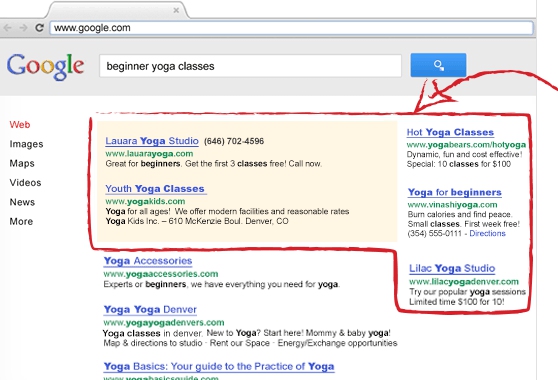
Google Ads (former Adwords) is an online advertising service that places advertising copy at the top or bottom of, or beside, the list of results Google displays for a particular search query. The choice and placement of the ads is based in part on a proprietary determination of the relevance of the search query to the advertising copy.
Comments: 1
Comments: 1
Alternatives and relevant products
Users who were interested in Google Ads, then also viewed:
News about Google Ads
21.04.26. Google Ads is transitioning Dynamic Search Ads to AI Max
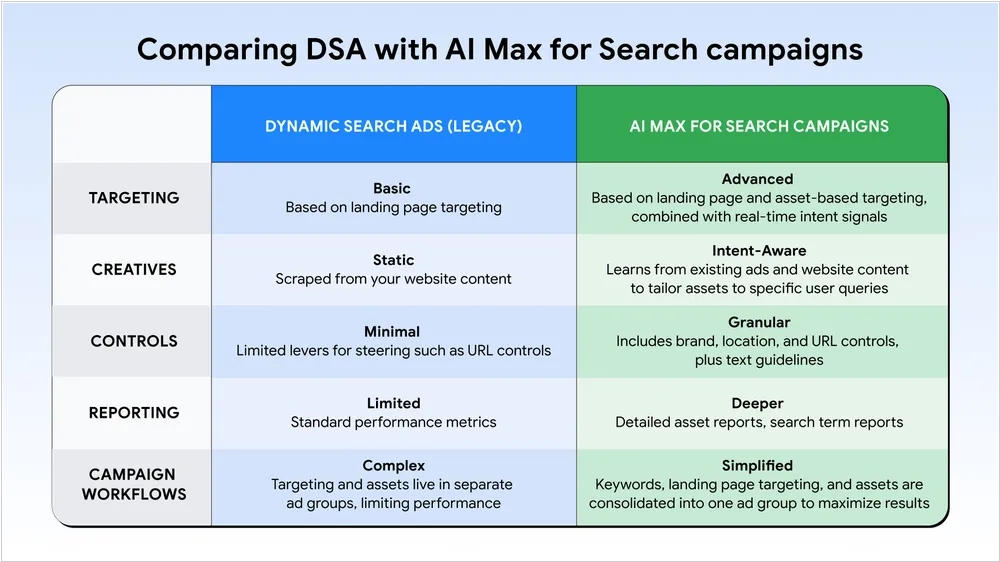
Dynamic Search Ads (DSA) in Google Ads is an advertising format for online stores: instead of manually creating an ad for each product, you enable DSA, and Google automatically creates ads from the product page that match user's search query. The new AI Max format does the same thing, but uses artificial intelligence. To create an ad, it uses not only the product page content but also the user's search query, existing user information, and your uploaded creatives (to match your corporate style). Additionally, AI Max offers more targeting options (by brand and location), more detailed reporting, and easier campaign creation (you only need to set up one ad group). Starting in September 2026, all existing DSA companies will be automatically migrated to AI Max.
2024. Google will start showing ads in AI answers
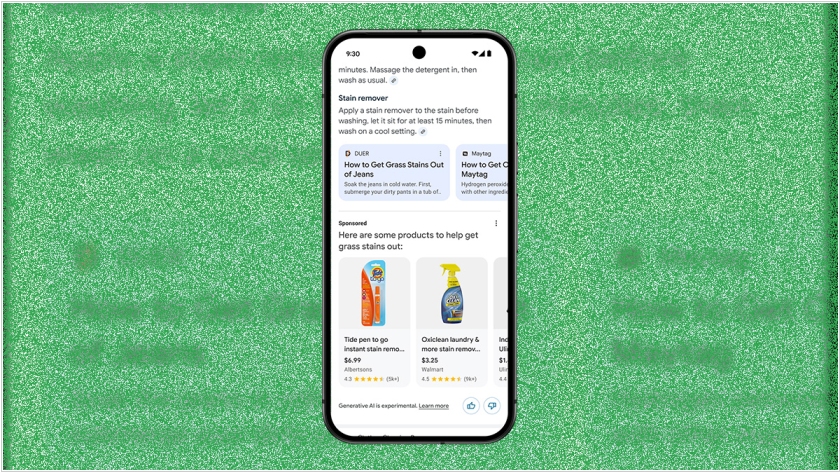
Google is attempting to monetize its AI Overviews - short summaries generated by artificial intelligence to summarize search results. Initially, ads will appear in AI Overviews on US mobile devices. These ads will be labeled as "ads." The company stated that it received positive user feedback during testing. Analysts estimate that the appearance of ads in AI Overviews could lead to a loss of over $2 billion in revenue for publishers due to a reduction in ad impressions on websites. AI Overviews could consume up to 25% of traffic, as users are less likely to click through to the source website after viewing the information.
2024. Google unified conversion tracking in Google Analytics and Google Ads
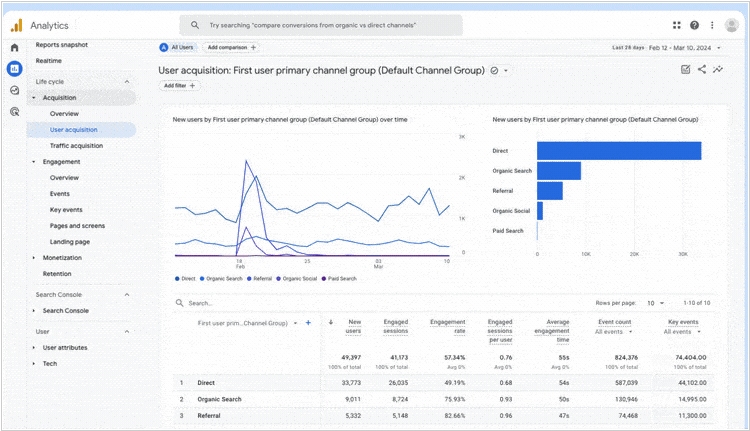
Google has unified the definition of conversions across its advertising system Google Ads and web analytics service Google Analytics. Google Analytics now features "Key Events" which will replace the existing conversions in behavioral analytics. Key Events help website and app owners continuously measure the most important actions on their websites and apps. This way, you can identify the most important customer actions for your business in Analytics and learn what works and what doesn't to improve your product and user experience on websites and apps. And, if you have a Google Ads account linked to Analytics, you'll now see approved conversions in the Ads workspace for campaign performance reporting. Advertisers will also receive conversion reports across channels other than Google Ads.
2023. Google Ads starts placing ads in augmented reality
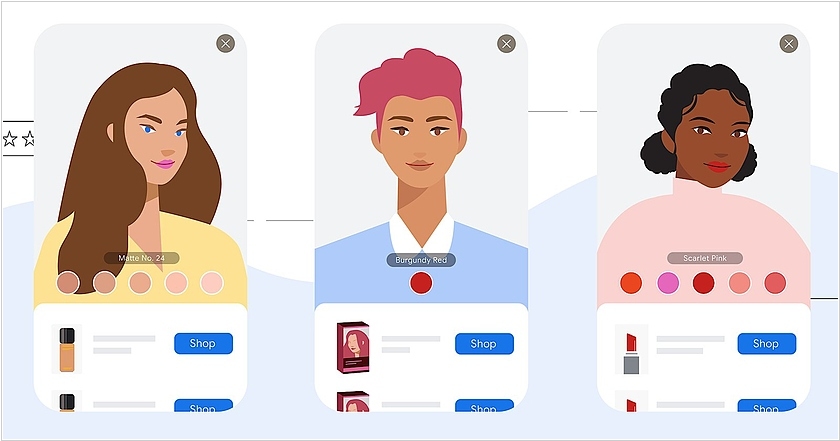
Google has unveiled an augmented reality advertising platform, AR Beauty Ads. It is aimed at promoting beauty products online. Brands will be able to advertise their products using a new interactive tool – a "virtual fitting room." Tasks such as finding the right shade of lipstick can be complex and even daunting. AR Beauty Ads technology is designed to simplify and make the process of choosing beauty products more engaging. Through the "virtual fitting room," shoppers can see how certain cosmetics look on different models or on themselves. The latter uses augmented reality technology to superimpose effects on the user's face in real time. This allows customers to "try on" lipstick, foundation, eyeshadow, and hair dye.
2020. Google Ads invented interactive 3D advertising banners

Google Ads has launched a new advertising format called Swirl, which allows you to include 3D objects in your ads. These ads allow shoppers to interact with the product as if it were right in front of them: rotating, zooming, and playing. Brands love this format, as it allows them to showcase their product features, Google notes. Companies that have already tried Swirl include Adidas, which unveiled its Ultra Boost sneakers, pet food manufacturer Purina, which created a game, Nissan, which unveiled the new Qashaqai, and others. User engagement is said to be eight times higher than with standard vertical advertising.
2018. Google Ads adds offline shopper report based on Google My Business data
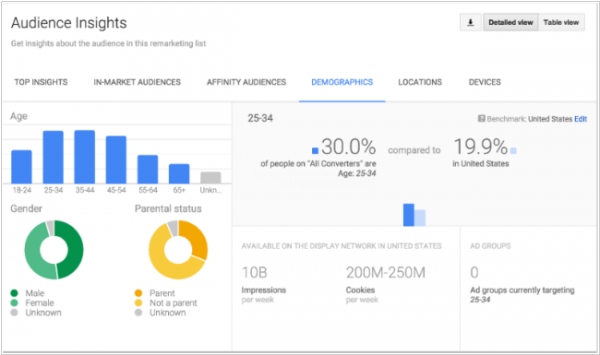
Google Ads will give advertisers who have linked their My Business and AdWords accounts the ability to receive an expanded report on visits to their offline stores. Previously, this option was only available to large companies, but starting in late July, it will be expanded to all users of the service. The report compiles estimated data on visits to all branches and other actions leading to conversion (calls, website views, Google Maps route planning, etc.). Google promised that all visitor data is "aggregated and anonymized." To access this report, go to the "All Campaigns" tab or select a campaign in the left panel of the new AdWords menu. Then, in the page selection menu on the left, click “Locations” and in the “Geo Performance Report” drop-down menu at the top of the page, select “Store Report.”
2016. AdWords expanded its remarketing capabilities
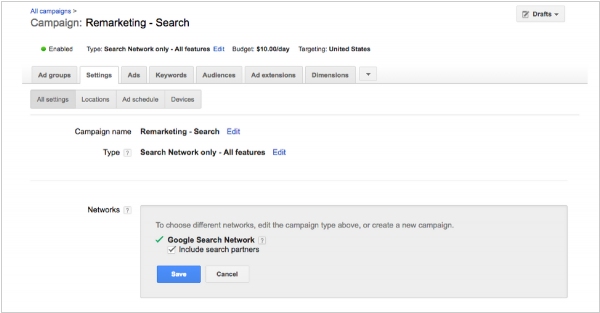
Remarketing lists for search advertising (RLSA) are now available for Google search partner sites. This allows advertisers to expand their reach. This feature allows campaigns to be configured so that ads are shown to people who have previously visited the advertiser's site and shown interest in their offerings, according to the service's blog. This new feature will expand the reach of search partners by including sites not owned by the company. Google believes this will more effectively leverage the potential of the auction model and keywords, increasing advertising reach without additional effort.