Top 10 Big Data Platforms for Eastern Europe
Updated: 01.06.2026
Some of the most popular Big Data platforms are mentioned below.
Users that searched for Top 10 Big Data Platforms for Eastern Europe then also viewed the following software:
See also: Top 10: Business Intelligence Software for Eastern Europe
Users that searched for Top 10 Big Data Platforms for Eastern Europe then also viewed the following software:
See also: Top 10: Business Intelligence Software for Eastern Europe
2019. Video: How Big Data and AI Help Organize a Tennis Tournament

The US Open starts today, and of course, IBM couldn't resist the opportunity to delight its investors with a new video about its technology. The US Open is a two-week-a-year operation, but during those two weeks, it requires its own data center to handle all the requests. Luckily, IBM is on hand, providing not only the cloud (instead of a data center) but also a platform for analyzing data: from determining outs in a tennis match to annual opponent statistics, which helps tennis coaches prepare their players for the next game. And, of course, AI helps create engaging content for fans, who send millions of requests a day to the US Open website.
2019. Video: Why Big Data Matters for Customer Experience

Processing big data requires a large system, like SAP. That's why SAP promotes the benefits of big data. For example, in this video, SAP CIS Managing Director Dmitry Krasyukov explains (for the blondes) how to monetize customer experiences and how to create those experiences using data processing.
2016. Microsoft's intelligent platform predicted the results of the European Football Championship.
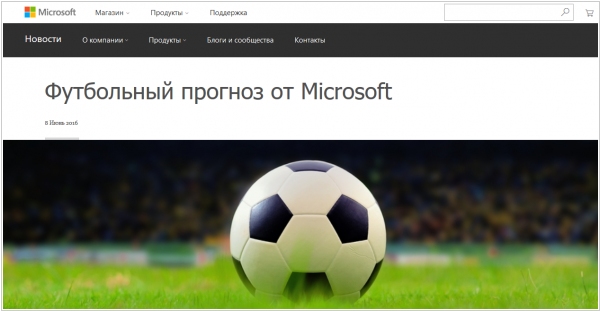
Microsoft (like any other IT giant) already has an analytical platform based on Big Data processing and artificial intelligence - Microsoft Cortana Intelligence Suite. Based on various data from your business systems, it can predict customer churn, equipment breakdowns, revenue changes, etc. And now, Microsoft is giving us the opportunity to test how accurately this platform works. After analyzing football history, statistical information about teams, player performance, injuries, and fan comments on social media, it presented its forecast for the European Football Championship, which starts today. So, according to the forecast: Germany will defeat Spain in the final with a 66% probability. And France will win the opening match against Romania with a 71% probability.
2016. IBM created storage system that determines importance of data using ML
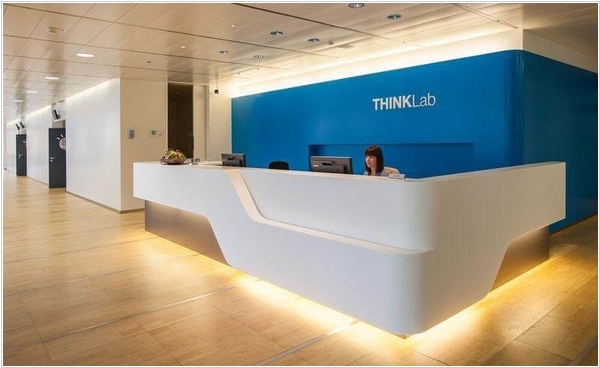
In the face of information overload, companies using data storage systems are faced with the challenge of separating important information from tons of data waste. Researchers from IBM's Zurich R&D division have presented a cognitive storage platform for big data that can independently determine the importance of information. Identifying key data from the entire data pool is accomplished using complex algorithms that consider not only access frequency, protection level, creation date, and so on, but also monitor how people interact with specific parts of the database. The system can also automatically detect low-value information and delete it or send it to cheap, secondary, low-performance storage devices.
2015. IBM becomes leading provider of weather forecasts for business
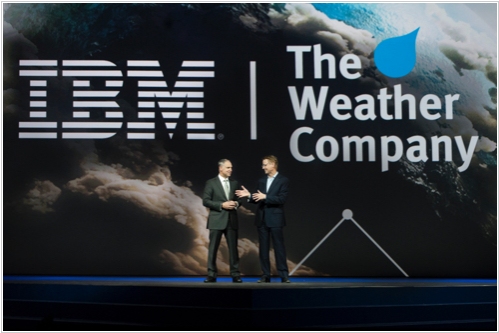
Is weather important for business? Of course, especially if your business is an agricultural enterprise, a travel agency, a cafe, a solar power plant, or a clothing store. Weather affects supply stability, product selection, and sales activity. Therefore, every self-respecting business analytics system should take weather forecasts into account. IBM thought so and acquired The Weather Company, the world's largest weather service. IBM plans to feed data from three billion forecast reference points to its Watson supercomputer and revolutionize weather forecasting. They also plan to create a platform that will allow third-party business applications to use weather information for a fee.

2015. Google launched new managed Big Data service Cloud Dataproc
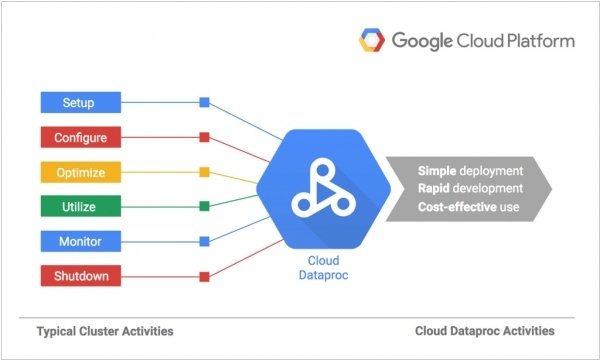
Google is adding another product in its range of big data services on the Google Cloud Platform - Cloud Dataproc service, that sits between managing the Spark data processing engine or Hadoop framework directly on virtual machines and a fully managed service like Cloud Dataflow, which lets you orchestrate your data pipelines on Google’s platform. Dataproc users will be able to spin up a Hadoop cluster in under 90 seconds — significantly faster than other services — and Google will only charge 1 cent per virtual CPU/hour in the cluster. That’s on top of the usual cost of running virtual machines and data storage, but you can add Google’s cheaper preemptible instances to your cluster to save a bit on compute costs. Billing is per-minute, with a 10-minute minimum. Because Dataproc can spin up clusters this fast, users will be able to set up ad-hoc clusters when needed and because it is managed, Google will handle the administration for them.
2015. SAP Unveils Next Big Thing: S/4HANA ERP System
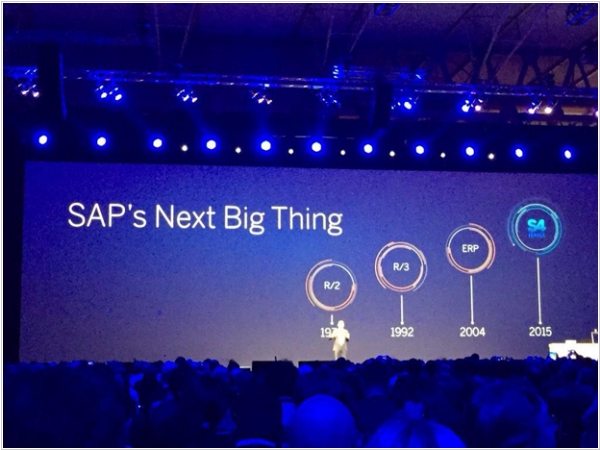
SAP's first ERP system was called R/2 and ran on mainframes. Then came R/3. In 2004, SAP Business Suite appeared. Recently, SAP unveiled (as they say) the most important product in its history - the new version of S4/HANA. When creating it, the developers were not thinking about how to wipe the floor with their eternal competitor Oracle, but about how to avoid being outdone by aggressive SaaS providers Salesforce and Workday. Therefore, S4 can work both on-premises and in the cloud. The main feature of the system is speed. As the name suggests, S4 is based on the leading Big-Data platform SAP HANA, which allows you to process very large amounts of data in seconds. The second main feature is the interface. Forget about complex tables and menus that you can't figure out without a bottle. SAP wants the new powerful system to be manageable via smartphone. At least 25 simple SAP Fiori apps will be available for working with SAP.
2014. Google is funding a startup developing AI for big data analysis.

Automatic Statistician, a startup that positions itself as a developer of AI for scientific data, has received a $750,000 Google Focused Research Award. The startup, founded by Cambridge professor Zoubin Ghahramani (pictured), is in its early stages. It specializes in finding relationships and building models from large arrays of incoming data using machine learning. The resulting system produces clear graphs and accompanying text describing the relationships found in natural language.