Искусственный интеллект для программирования
Updated: 18.02.2026
2025. ChatGPT launched its app store

Back in October, ChatGPT announced the availability of third-party apps in its chatbot. Some major service providers, including Expedia, Spotify, Zillow and Canva, have implemented integration add-ons that allow users to access their services directly from Chat conversations. Now, the company has launched the OpenAI Developer platform with SDK toolkit and dedicated AI agents for Codex development. This platform allows any interested developer to publish their apps to ChatGPT. Once approved, an add-on is added to the app catalog, which is located in the Chat tools menu.
2025. Anthropic integrated Claude into Slack.
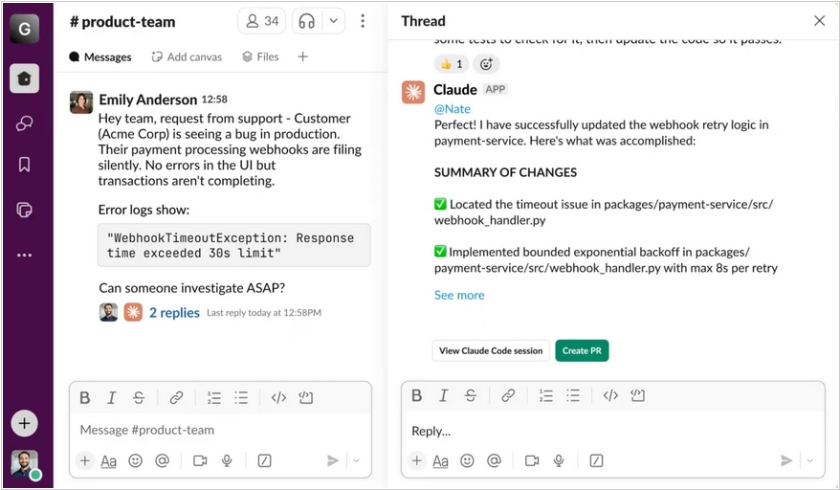
Anthropic has integrated its AI model, Claude, into Slack. Users can now interact with the model in channels, threads and private messages. Enterprise AI agents and chatbots powered by Claude can leverage context from the Slack workspace. Claude can participate in chats and assist in discussions, analyze documents or prepare responses to important messages directly within Slack. The model has access only to channels and conversations accessible to the specific user. When Claude is engaged in a public thread, it first creates a draft privately so that the author can review and edit it. Additionally, if a company uses Claude Code (one of the best code generation models available today), connecting it to Slack allows code generation to take into account technical agreements and decisions reached in meetings.
2025. Google Adds Canvas to Gemini
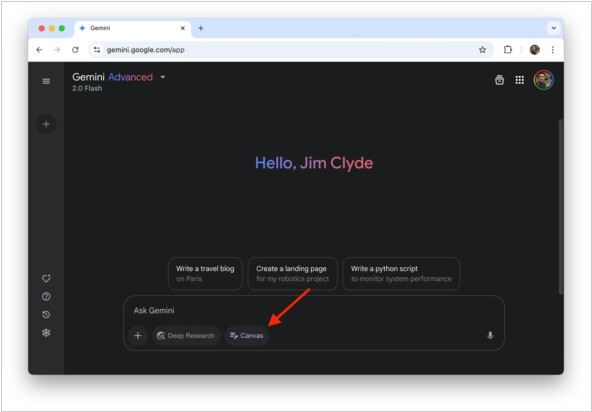
Gemini has introduced Canvas, an interactive workspace designed to make writing and programming more comfortable and efficient. Competitors ChatGPT and Claude introduced a similar feature six months ago. Using Canvas, you can create drafts of texts and quickly edit them with Gemini's feedback to improve clarity, tone, length, or formatting. This feature is especially useful for content creators who need to refine their texts without switching between multiple tools. For developers, Canvas is an equally powerful tool. It can generate, debug, and explain code, facilitating the iteration of your projects.
2024. Gemini 2.0 allows to generate images, audio and execute code
Google has unveiled a new version of its AI model, Gemini 2.0 Flash, which can generate not only text but also images and audio. Furthermore, the model is capable of working with third-party applications and services, such as Google Search, executing code, and much more. According to Google, Gemini 2.0 Flash is twice as fast as the previous version, Gemini 1.5 Pro, and significantly improves performance in tasks related to programming and image analysis. Along with the announcement of Gemini 2.0 Flash, the company also introduced the Deep Research feature, which allows AI to scan web pages and generate analytical reports based on an initial query. Compared to the first version of Gemini, the new model has improved reasoning abilities, understands more complex instructions, supports working with longer contexts, and has become more "agentive"—that is, capable of performing multi-step tasks independently, upon user request.
2024. Google rolls out Gemini in Android Studio for coding assistance
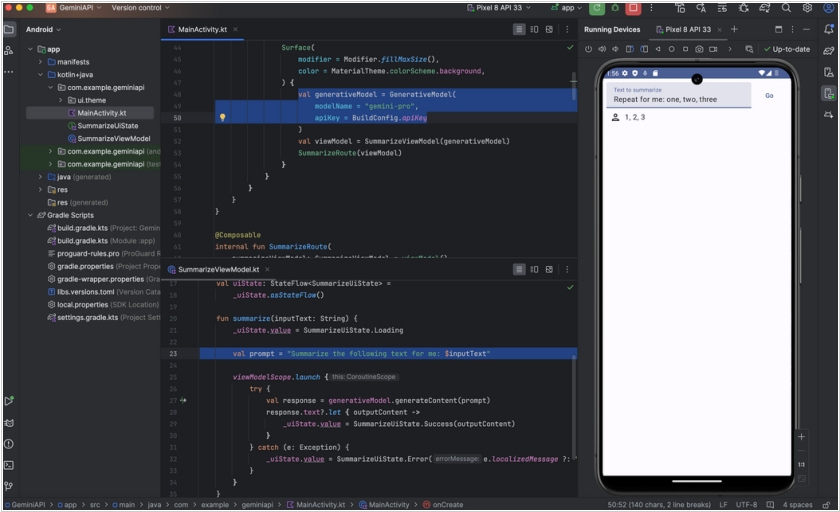
In a move that might make even the most cynical developer raise an eyebrow (and then quickly lower it again), Google is steadily weaving its Gemini magic into all manner of things, this time gracing Android Studio with the newly christened "Gemini Pro." This rather clever little bot has taken up residence in the IDE like an enthusiastic intern, fielding coding questions with an alarming eagerness to assist. Google, ever the charmer, insists that Gemini Pro is now even better at code completions, debugging, resource-hunting and writing the kind of documentation that might, for once, not induce mild panic. Privacy, of course, remains sacrosanct—or at least as sacrosanct as things get in this day and age—requiring developers to log in and specifically say, "Yes, I want the bot." And if that weren't enough android Studio thoughtfully hands developers a ready-to-go Gemini API starter template, as if to say, "Go on, then—get cracking with this generative AI wizardry in your apps!"
2022. AWS launched service that writes code using natural speech
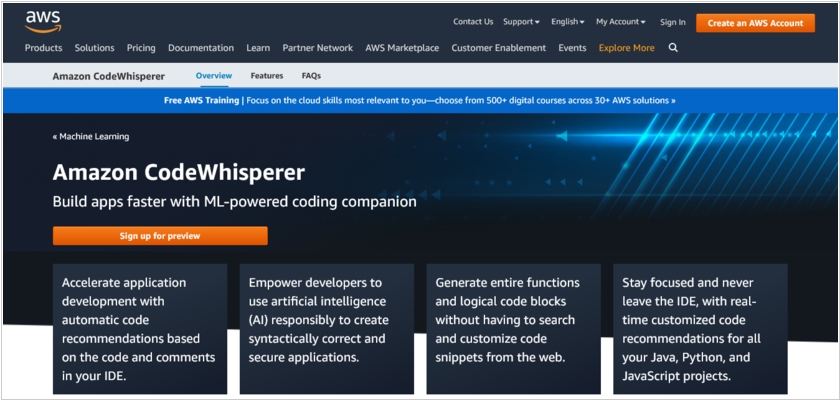
Amazon has launched a cloud service, CodeWhisperer, which uses machine learning to generate suggestions as you write code. The tool is designed to accelerate software development and create training datasets for its artificial intelligence projects. CodeWhisperer was trained on trillions of lines of code from open-source projects, both internal repositories and various other sources. The service can generate more than ten lines of code at a time and bases its recommendations on various contextual cues. Jeff Barr, vice president and chief evangelist at Amazon, explained that CodeWhisperer uses a variety of contextual cues to generate recommendations, including the cursor location, the code preceding the cursor, and code in other files in the same project.