
IBM Cloud
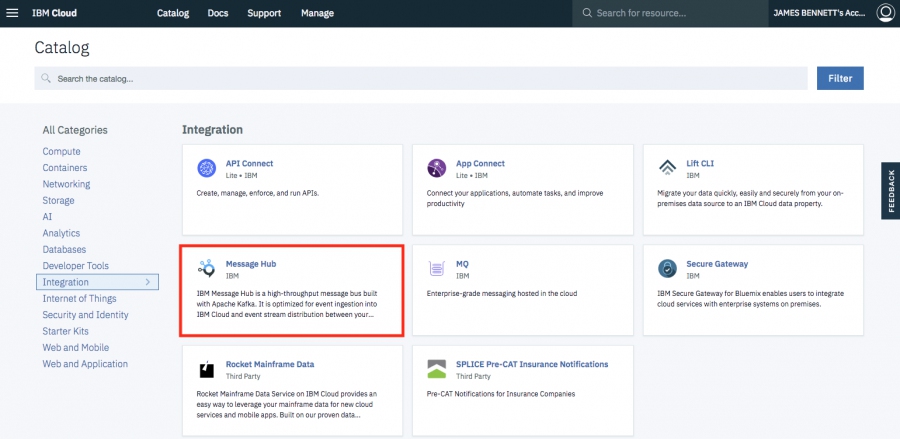
IBM Cloud offers open cloud infrastructure services for IT operations. The IBM Cloud gives you the flexibility to have public, private or hybrid clouds, depending on your business needs. With the IBM Cloud you can unlock more value in your business and in the technology you already have. It’s the cloud that can integrate enterprise-grade services and help speed up the way you innovate.
Add comment
Add comment
Alternatives and relevant products
Users who were interested in IBM Cloud, then also viewed:
News about IBM Cloud
2022. IBM z16 is the first IBM mainframe with artificial intelligence.

IBM has unveiled a new mainframe with an integrated AI accelerator, the z16, which is based on the Telum microchip released in summer 2021. According to IBM, the processor is optimized to process 300 billion financial transactions per day. The z16 is resistant to quantum computers capable of breaking encryption, thanks to its cryptographic lattice and the Crypto Express 8S (CEX8S) hardware security module. Unlike supercomputers, mainframes are primarily designed to support large volumes of input, output, and storage data.
2021. IBM Cloud Satellite brings IBM public cloud on premises
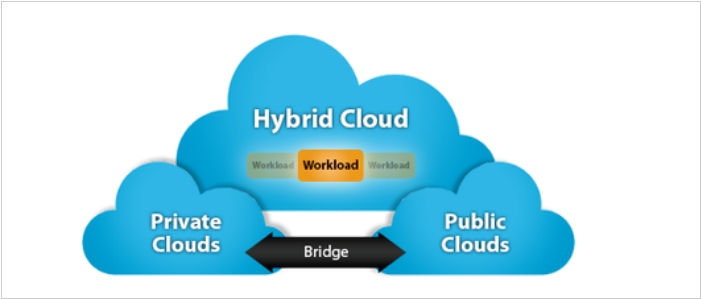
While IBM's primary cloud message over the past few years has been about multi-cloud, it has continued to offer its own public cloud and has targeted it at complex enterprise workloads that typically run on mainframes or other systems. The new platform IBM Cloud Satellite is intended as an extension of the IBM Public Cloud that can run inside the customer's data center or out at the edge. Like IBM's other hybrid cloud offerings, underneath the hood IBM Cloud Satellite runs on Red Hat OpenShift, the Kubernetes management environment. It works by adding the mechanism of a Location that signifies an instance of IBM Public Cloud outside IBM's data centers.
2018. IBM launched cloud platform for training neural networks based on Watson Studio
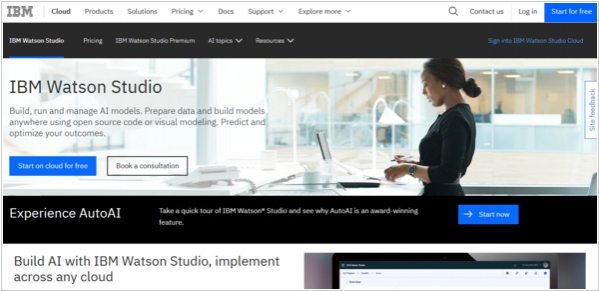
IBM's online platform Watson Studio has received a new addition - Deep Learning as a Service (DLaaS). It enables a wider range of enterprises to leverage the latest advances in machine learning by lowering the barrier to entry. With the new tools, developers can develop their models with the same open-source frameworks they likely already use (e.g., TensorFlow, Caffe, PyTorch, Keras, etc.). IBM's new service essentially offers these tools as cloud services, and developers can use a standard REST API to train their models with the resources they need or within their available budget. IBM claims that its service offers a number of advantages over Azure ML Studio. It offers a visual neural network designer that allows even non-programmers to configure and design their neural networks.
2014. IBM opens Watson capabilities to third-party applications

IBM has launched Watson Developer Cloud, which allows application developers to harness the cognitive capabilities of this artificial intelligence. This is implemented through APIs on the IBM BlueMix cloud platform. Specifically, functions such as language detection, machine translation, text analysis, data visualization are available, as well as Watson's core function—answering questions posed in natural language (which is what Watson was originally designed for). This means you can ask Watson to examine text materials on a specific topic, ask it questions, and receive short answers (requiring knowledge, not logical thinking). However, for now, Watson can only answer questions in English.
2010. IBM Cloud is moving software development to the cloud

Software development has long been taking place in the cloud: SaaS project management services, online bug trackers, wikis, and SVN are already common tools for software companies that often outsource and employ remote developers. However, testing of the software under development typically occurs on in-house servers. Developers spend a significant amount of time and money creating a test environment, especially when developing a serious business application. And if a company is developing several applications simultaneously, testing becomes a nightmare. Today, IBM launched a new service on its IBM Cloud platform, which allows you to quickly create a virtual test server and pay a very reasonable price for the resources used. To create a convenient experience for developers, IBM and its partners provide tools for managing cloud infrastructure and project management. IBM claims that this service will reduce software development costs by 50% and reduce the number of bugs by 30%.