Топ 10: Персональные голосовые ассистенты для бизнеса
Updated: 10.02.2026
2026. Apple's Siri has switched from ChatGPT to Google Gemini.
A year ago, Apple began using OpenAI's LLM as Siri's brain (ostensibly as a temporary solution while Apple continued working on its own model). However, Apple is a company of perfectionists and apparently they can't create a high-quality LLM of their own. Meanwhile, over the past year, Gemini has outperformed ChatGPT in various benchmarks and rankings (and apparently offered more money). Therefore, the company made an important decision: Google's Gemini models will form the basis for future Apple Intelligence, including the long-awaited AI update for Siri, scheduled for launch this year.
2025. Microsoft Adds Anthropic Models to Copilot
OpenAI recently signed a $100 billion contract with NVidia, seemingly replacing Microsoft as its preferred partner. And perhaps that's why Microsoft suddenly decided to use models from OpenAI's main competitor, Anthropic, in its AI assistant Copilot (along with ChatGPT). Microsoft signed a deal to use Anthropic's AI in Office 365 applications such as Word, Excel and Outlook. Thus, business users of Copilot will be able to choose between GPT and Claude for specific tasks, such as complex research, building custom AI tools and enterprise-grade agents. For example, Claude Opus 4.1 is better suited for complex reasoning, coding and deep architecture planning, while Claude Sonnet 4 is better suited for routine development tasks, processing large amounts of data and content generation.
2025. OpenAI unveils GPT-5 that will waste your time
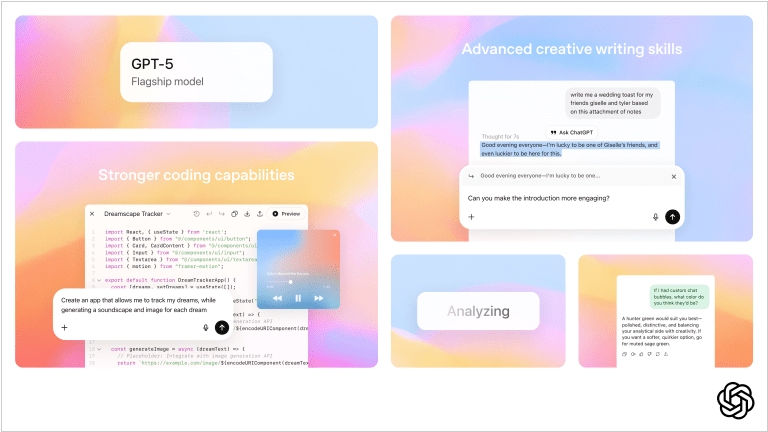
OpenAI has unveiled GPT-5, its new flagship model that will now power ChatGPT. GPT-5 is positioned as the first “unified” model that combines the reasoning capabilities of the O-series models with high-speed regular models. Instead of asking you to select the right settings, GPT-5 itself determines how to offer the best response: by quickly answering or spending additional time “thinking” about the answers. (But as you know, answers after thinking are just as hallucinatory as without them, but now you can’t turn off reasoning - you can only constantly click Quick Reply). In addition, the new model (unlike GPT-4) is reportedly optimized for creating not chatbots, but agents capable of performing a wide range of tasks on behalf of the user.
2025. ChatGPT adds an agent that can perform tasks on websites
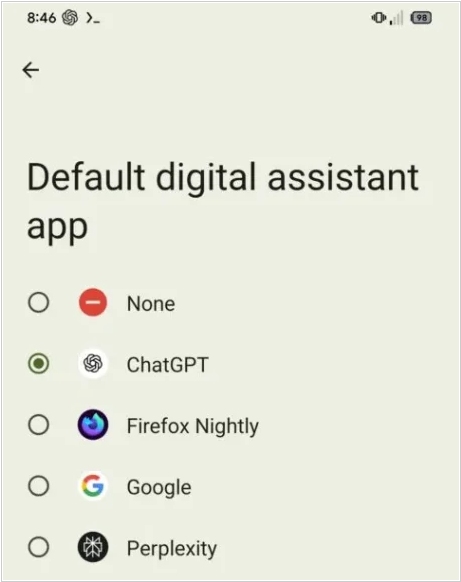
OpenAI has introduced ChatGPT Agent, an AI agent that can navigate the web and perform tasks on your behalf. It can search the web and collect information, scroll pages, click buttons and submit forms. For example, it can go to your GMail and answer your question about who sent you new emails. In fact, it works similarly to the browser assistant Perplexity Comet. Anthropic also has a similar tool called "use computer" that can control the cursor and write code. OpenAI and Anthropic are expected to introduce browsers with built-in agents in the near future.
2025. Proton unveils confidential AI assistant
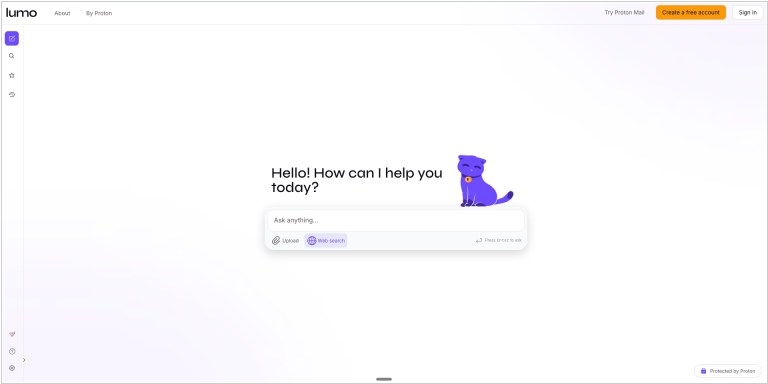
Proton (the secure email, file storage and VPN provider) unveiled its AI assistant, Lumo, which also positions itself as private and secure. The company claims that Lumo is powered by its own open-source models (rather than the APIs of cloud platforms like ChatGPT) and does not use user data for training. Furthermore, the chatbot does not store conversation logs, uses end-to-end encryption for chat storage, and offers an disappearing message mode. Lumo is available through a web client, as well as through apps for Android and iOS. An account is not required to use the chatbot or ask questions, but if you have an account, such as Proton Drive, you can ask Lumo questions in the context of your files stored in the cloud. Although the chatbot has internet access, it may not find recent search results.
2023. Google Assistant is getting AI capabilities of Bard
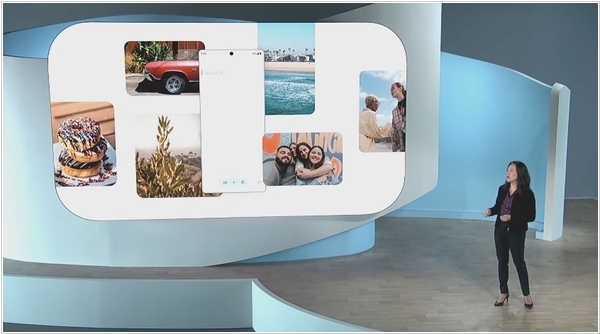
Imagine, if you will, that the Google Assistant has somehow evolved into an entity of mildly alarming brilliance, now backed by a rather cerebral companion named Bard, gifted in all things generative AI. The two, working together like a digital odd couple, can now tackle everything from peculiar inquiries to the deeply philosophical and mundane. Fancy a rummage through your Gmail for unread missives of the past week? Fear not! This dashing duo can do just that—provided you’ve given them permission to rummage, of course. But they won’t stop there; no, they’re up for all manner of personal pursuits: planning epic voyages, crafting grocery lists and even composing delightful little snippets for your social media feed. This, however, is a mere flirtation with the future, as Google intends to gently observe how users engage with this digital symphony of assistance before making it a universal upgrade for Android and iOS alike.
2023. Salesforce introduces Einstein Copilot Studio to help customers customize their AI
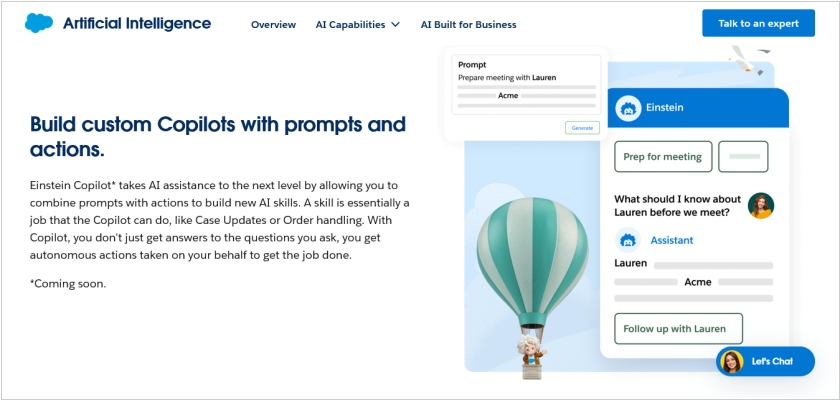
In a move sure to intrigue and possibly befuddle the uninitiated, Salesforce has rolled out something grandly named Einstein Copilot Studio, an ingenious contraption that lets users twist and turn the base Einstein GPT and Einstein Copilot features to their heart's content. This marvel of modern wizardry is assembled from three slightly mystical components – prompt builder, skills builder and model builder – each one designed to grant mortals an unprecedented degree of customization. The prompt builder, for instance, offers the tantalizing opportunity to fiddle with prompt templates, making it possible for customers to inject a bit of personal flair: think prompts brimming with references to their own products, brands and secretive bits of business lore known only to them (and possibly their accountant). Then, of course, there’s the skills builder, which takes things a step further by enabling companies to embed actions right into their prompts, so Copilot can roll up its sleeves and do more than just spit out data and answer questions. All of this, in a sweeping gesture of customization, places organizations firmly in the driver’s seat, allowing them to dictate which workflows Copilot can poke around in and which it cannot, marking a rather momentous stride forward for those who crave absolute control (or as close to it as one can get in the Salesforce galaxy).
2023. Google’s Duet AI becomes a meeting assistant, doc summarizer, and chat companion
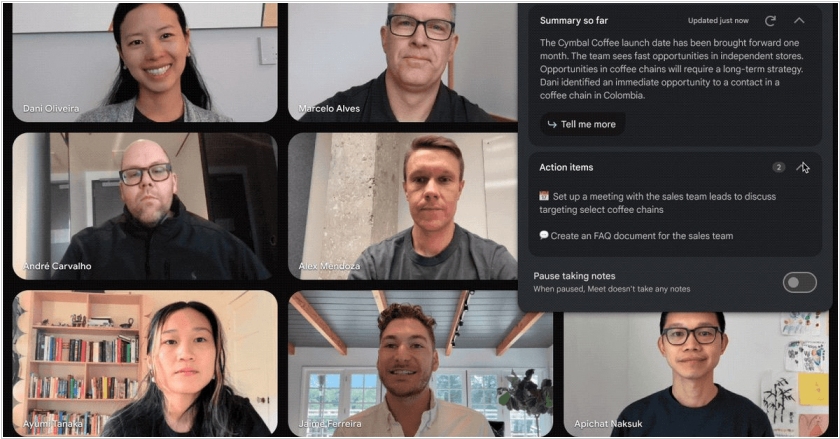
Google is making its generative AI-powered assistant, Duet AI, widely accessible to organizations using Google Workspace. Previously tested with numerous companies, Duet AI is gaining new functionalities, serving as a meeting assistant, a Google Chat chatbot, a document summarizer and enhancing personalization in Gmail's smart replies. Available through a no-cost trial, Duet AI enables users to generate presentations by utilizing text, charts and images from relevant content in Google Drive and Gmail. For example, a financial analyst could streamline the process of summarizing Q3 performance by instructing Duet AI to analyze Google Sheets, P&L Docs, Monthly Business Review Slides and pertinent emails from sales leads. Another use case sees Duet AI being added to Google Meet to help you look your best with studio look, studio lighting and studio sound.
2020. Microsoft to sunset Cortana on iOS and Android in pivot to productivity-focused assistant
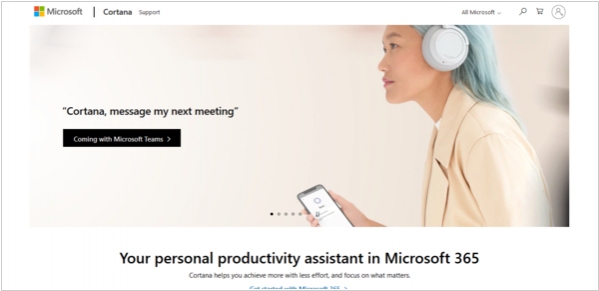
Microsoft will shut down Cortana on iOS, Android and Surface Headphones. The decision reflects Microsoft’s focus on business and enterprise technology over consumer offerings. Microsoft will focus on repurposing aspects of Cortana for its suite of productivity products Microsoft 365 rather than attempting to compete on consumer devices with leaders in the virtual assistant space, like Apple, Google, and Amazon. Cortana has fallen behind those competitors as Microsoft doubles down on enterprise technology.
2015. Microsoft released Cortana for Android
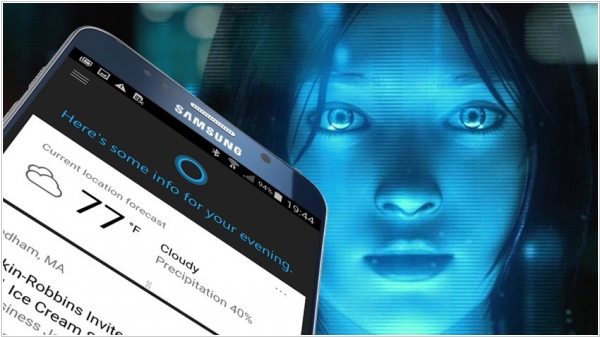
Microsoft released beta version of Cortana on Google Play. Cortana on Android has much of the same functionality as the Windows version of the assistant. You can use the app to set reminders, search the web and add items to your calendar. The Android app also comes with the same "notebook" feature, which lets you tweak Cortana's personalized recommendations for nearby restaurants, news alerts, weather updates, sports scored and other categories based on your previous habits and interests. There are, however, a few limitations to the Android app. You can't use Cortana to adjust your phone's settings, launch other apps or use the "Hey Cortana" command to initiate a query. But you can make the assistant feel a little more like a native part of Android by replacing the Google Now shortcut with Cortana when you long press on the home key.