
Microsoft Azure
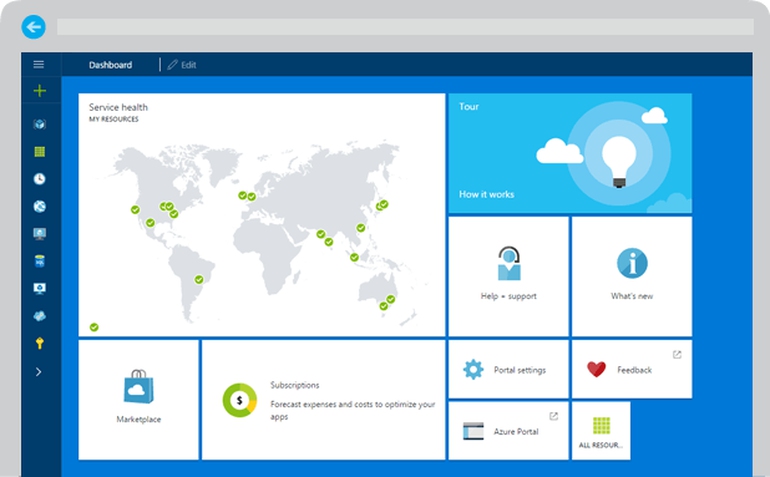
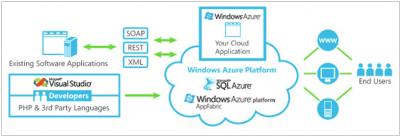
Microsoft Azure is an open and flexible cloud platform that enables you to quickly build, deploy and manage applications across a global network of Microsoft-managed datacenters. You can build applications using any alternative language, tool or framework. And you can integrate your public cloud applications with your existing IT environment.
Add comment
Add comment
Alternatives and relevant products
Users who were interested in Microsoft Azure, then also viewed:
News about Microsoft Azure
2021. Microsoft Azure to host GPT-3 instances for its clients
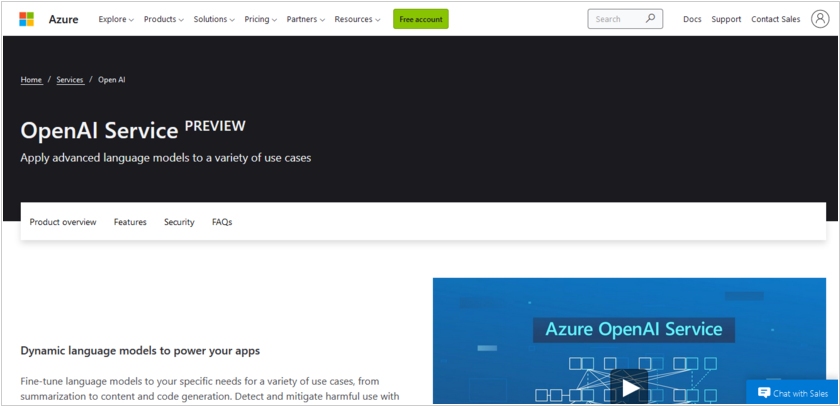
Microsoft announced OpenAI Service based on its Azure cloud platform. The service can be used for a variety of tasks, from processing client requests and summarizing large texts to writing code or generating answers to questions. Microsoft cited the example of a sports franchise developing an app to interact with fans during matches. Using GPT-3, a stream of comments can be transformed into short compilations of game highlights or generated original content for social media. Microsoft promised to provide customers with tools for filtering and moderating user requests and responses. In May, the company integrated the GPT-3 algorithm into the Power Apps low-code development platform to simplify coding.
2021. Microsoft acquired CloudKnox Security - startup that enables secure Azure authorization

Microsoft has acquired CloudKnox Security, a developer of a platform for protecting against unauthorized access across cloud and hybrid infrastructures. CloudKnox controls access to multi-cloud environments, endpoints, workloads, and workloads across Amazon Web Services, Microsoft Azure, Google Cloud, Active Directories, and VPN connections. Built-in monitoring tools monitor user activity for anomalies, and the account management system tracks suspicious changes in geolocation and client type. According to MarketWatch, the global market for identity and access management solutions for cloud resources is valued at $1 billion. Increased demand is driven by the increasing use of hybrid cloud resources, where configuring and delimiting access often presents significant challenges, despite the wide variety of management tools available.
2021. Microsoft Azure Adds PyTorch Framework Support for Enterprises

Microsoft has launched PyTorch Enterprise, a new service in the Azure cloud that provides developers with additional support for using the PyTorch framework on Azure. This essentially means commercial support for PyTorch from Microsoft. PyTorch is an open-source machine learning platform based on Python, with a focus on computer vision and natural language processing. It was originally developed by Facebook and is at least somewhat comparable to Google's popular TensorFlow framework.
2020. Microsoft Azure AI now describes images as well as humans

A new neural network model for generating image captions is now available to consumers through Computer Vision in Azure Cognitive Services, which is part of Azure AI, allowing developers to use this capability to improve the accessibility of their services. According to the study, when evaluated on nocaps tests, the AI system generated more meaningful and accurate captions than humans did for the same images. The new model is already used in the Seeing AI app and will be available later this year in Microsoft Word and Outlook for Windows and Mac, as well as PowerPoint for Windows, Mac, and the web. Automatic captioning helps users access the important content of any image, whether it's a photo returned in search results or an illustration for a presentation.
2020. Microsoft will join forces with OpenAI to create an AI supercomputer

Microsoft is investing $1 billion in Elon Musk's OpenAI, a startup developing general AI, and will also provide its Azure cloud platform for the creation of a virtual AI supercomputer. Its purpose is to train the next generation of massive distributed AI models that can perform more complex tasks, such as moderating chats, analyzing speeches, and generating code from GitHub search results. Such models require vast amounts of data, such as billions of pages of open-source text.
2019. Microsoft unveiled services for recognizing handwritten text and completed forms
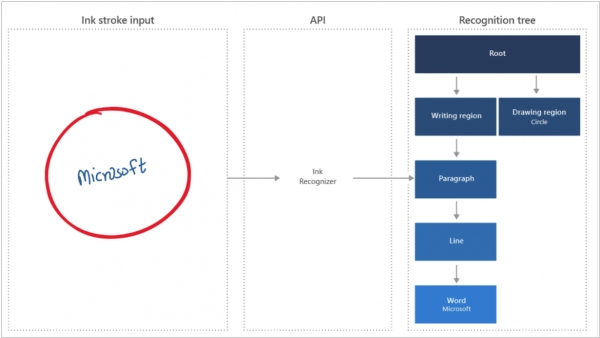
Microsoft has introduced several new cognitive services on its cloud platform Azure Machine Learning. Firstly, these are gifts for companies that deal with documents, forms, and memos containing handwritten text. The Ink Recognizer and Form Recognizer services allow you to convert all these papers into digital text and data. The Conversation Transcription service converts telephone conversations into text, recognizing the author of each phrase. Unfortunately, all this is only in English for now. Another new service, Personalizer, allows you to select personalized recommendations for website or online store visitors based on behavioral factors. In addition, Microsoft has introduced a new visual designer for creating machine learning models. Now even marketers can play around. You just need to upload a database and specify which parameter you want to predict.
2017. Microsoft added Google's TensorFlow ML platform to Azure
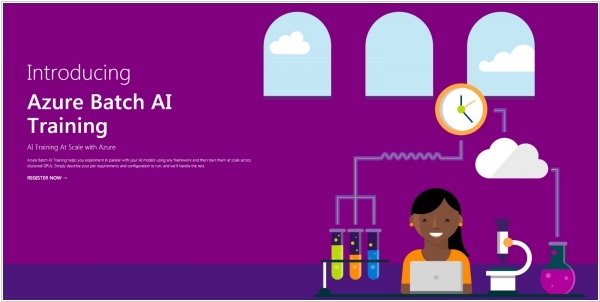
Microsoft has introduced the Azure Batch AI Training toolkit for training deep neural networks, which will soon become part of the Azure Machine Learning platform. It enables the use of the most popular deep learning frameworks: Google's TensorFlow, Microsoft's Cognitive Toolkit, Caffe, and "any other libraries." The system is designed for training deep neural network models, such as recurrent and convolutional neural networks and deep belief networks. One of the key features of such models is that they require large amounts of memory to store and process information about all internal dependencies.
2017. Microsoft is making it easier for businesses to build blockchain networks
Microsoft has unveiled a set of services based on its Azure cloud platform, helping developers and corporations create blockchain networks for business. These networks enable collaboration between companies, eliminating complex bureaucracy while ensuring contract compliance. Microsoft is proposing to use Etherium, a blockchain network created by our compatriot Vitalik Buterin, as its blockchain network. Its unique feature is that it can support not only payment transactions but also any other business transactions (using a technology called "smart contracts"). These smart contracts can be programmed in a specialized language. The blockchain network also needs to be integrated into the corporate accounting system. These are precisely the tasks that the new Azure service helps to solve.
2013. Microsoft pushing Cloud OS

As you know, Microsoft's Windows Azure is the leader in cloud platform market. It's just one of several options along with Amazon Web Services, Google Compute Engine, OpenStack, VMWare vCloud. This situation is very frustrating for Microsoft, which used to be the exclusive platform (OS) vendor. Therefore, Microsoft is coming up with a new thing - Cloud OS. This is not a specific product, but rather a marketing term incorporating several systems: first of all Windows Azure, Windows Server and System Center. The idea is that the Cloud (the legendary thing that stores and processes data) is usually located not in the farm of specific provider (Amazon, Google or Microsoft). It also lives in a rented or own Internet servers and in the office (on local servers). Depending on task, budget and security requirements, each company may choose on where to host data and applications. ***
2012. Windows Azure provides Linux as a Service

Once Linux was the main threat to the bright future of Windows and now Microsoft provides Linux as a component of its cloud platform Windows Azure. And that's because the purely Microsoft-oriented cloud - was not very competitive in the fight against Amazon, RackSpace, VMWare, Oracle, Google and other providers. So, Windows Azure becomes not just PaaS, but also IaaS platform. Users can create Linux or Windows virtual servers and pay for them on per-hour basis, just like at Amazon Web Services. Available Linux distributives include Ubuntu, SUSE and CentOS. Perhaps Microsoft will soon also partner with Red Hat. But Linux as a Service - is not the only interesting update at Azure. ***
2010. Windows Azure is already sold in boxes
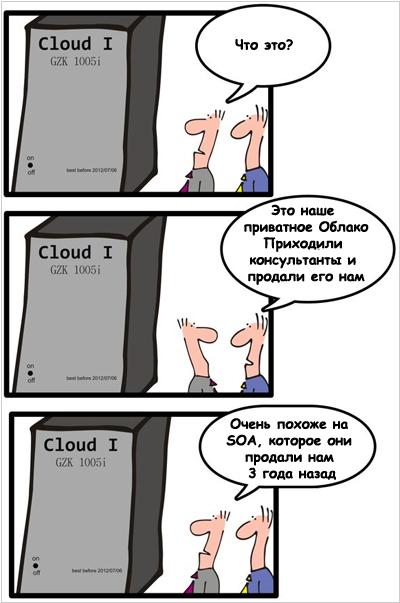
Though there is a big deal of debates around the "private cloud" term (if it's correct to call own data center, optimized with virtualization technology, a "cloud") - no one can deny that these things called "private cloud" are already selling well. The fact is that many companies are still not ready to move their IT infrastructures to public cloud platforms like Amazon EC2 and Windows Azure. But when they are told that "you can take the advantage of Cloud Computing (cost-efficiency, scalability) without any risk for data security, because the cloud will be locked in your office" - they like this. Obviously, private clouds are the necessary intermediate stage of transition companies to "real clouds" and cloud providers have to take a step back so that the process started. So it was with Microsoft. ***
2010. Salesforce acquired Google Apps Marketplace champion - Manymoon
Salesforce has acquired the popular SaaS service Manymoon, that is known as the best project management tool for Google Apps. Moreover, since Google Apps Marketplace opening, Manymoon has been the top app there. So, it would be logical is Google bought the service. But Salesforce, that is now aggressively taking on collaboration market, did it first. Obviously, soon the project management functionality will appear in Salesforce Chatter. In addition, for Salesforce this acquisition means getting a connetor to Google Apps. So we can also expect better integration between Chatter and Google services. According to the official Manymoon announcement, the service will continue to exist separately and will not change anything for the free and paid versions. Besides, the developers promise to continue adding new features. They also say that Salesforce will significantly improve the scalability, reliability and security of Manymoon. ***
2010. Microsoft and HP to sell Clouds together
Cloud Computing can be deployed not only in platforms like Amazon, Google App Engine or Windows Azure. The Cloud becomes a popular solution, needed by large enterprises, service providers and large SaaS companies. And the competition on this market is so high that even such giants as Microsoft and HP prefer not to play alone. Today the companies announced the alliance for creation and sale of cloud-solutions. The partnership is valued at $250 million. Microsoft and HP already have an experience of creating the Windows Azure cloud, that runs on HP gear. Microsoft-HP cloud solutions will obviously provide a high level of integration between hardware and Windows-based software environment. ***
2009. Chrome OS vs Windows Azure: 2-0 Google wins
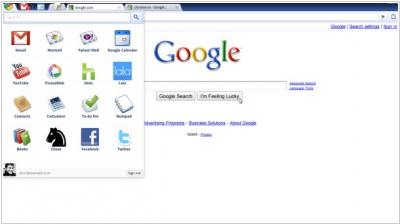
This week, Microsoft and Google demoed their new operating systems: Google showed Chrome OS, while Microsoft presented Windows Azure. As for Google Chrome OS, everything simple. This operating system for netbooks containes only a pumped browser. It instantly loads and enables netbooks to run any web-apps on high speed. Users don't not need to install programs - it's supposed that they all run on the Web. Computer stores only files and local cache of these web apps that can work offline (e.g. GMail). Each Web application can't affect others and the system core, thus ensuring the highest level of security and reliability. And most important, the cost of Chrome OS = 0 $, and perhaps this factor will be decisive when users choose between the cloud and traditional applications. The first netbooks with Chrome OS will appear in the second half of 2010. ***