
Машинное обучение для бизнеса - обзор
Updated: 19.02.2026
2017. Microsoft added Google's TensorFlow ML platform to Azure

Microsoft has introduced the Azure Batch AI Training toolkit for training deep neural networks, which will soon become part of the Azure Machine Learning platform. It enables the use of the most popular deep learning frameworks: Google's TensorFlow, Microsoft's Cognitive Toolkit, Caffe, and "any other libraries." The system is designed for training deep neural network models, such as recurrent and convolutional neural networks and deep belief networks. One of the key features of such models is that they require large amounts of memory to store and process information about all internal dependencies.
2017. IBM opens access to Watson's core component
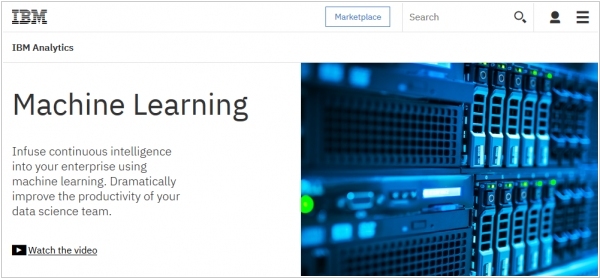
Two years ago, IBM launched Watson Developer Cloud, which provides developers with APIs to Watson's natural language processing capabilities. Now the company is opening access to Watson's core component, the IBM Machine Learning platform (though not yet from the cloud, but to corporate data centers). One of the platform's key features is a built-in recommendation engine, which is designed to help data scientists choose algorithms for their projects. The engine evaluates a number of parameters, including the type of records a company wants to process and how quickly results are needed. The developers say IBM Machine Learning works with any programming language and supports most popular AI frameworks in the industry, including SparkML, which IBM is actively developing.
2015. Amazon added machine learning service to its cloud platform

Amazon's cloud platform powers numerous applications. To keep these applications up-to-date and smarter, Amazon has added a new service to the platform: Amazon Machine Learning. It enables the use of machine learning algorithms to create models for finding patterns in big data. Last year, IBM launched a platform that allows third-party applications to leverage Watson's artificial intelligence capabilities, but that focused on specific AI functions (such as speech recognition and machine translation). Amazon, however, offers a more general-purpose tool for processing any big data.