
Облачные платформы для создания ИИ приложений
Updated: 13.02.2026
2023. Google launches AI Studio for developing chatbots based on its Gemini model
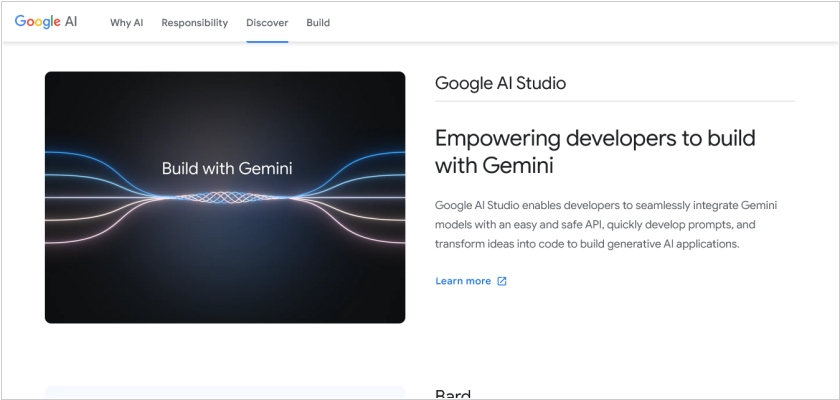
In a move that can only be described as quintessentially Google, they’ve flung open the doors of the Gemini platform, inviting developers in with a flourish and a handful of shiny new services. Chief among them is the rebranded AI Studio, which, in a former life, answered to the name MakerSuite (but really, who’s keeping track?). This web-based wonder is your personal portal to the vast Gemini ecosystem, giving you a front-row seat to Gemini Pro now and the tantalizing promise of Gemini Ultra arriving next year. With AI Studio, developers can easily summon chatbots and prompts, wielding API keys like magic wands to slot them into apps or dive headlong into more complex code in a grown-up integrated development environment (IDE). And just to keep things interesting, Google’s thrown in a generous free quota—60 requests per second—which is the sort of speed that makes you wonder if you’ll ever run out. It’s almost as if they’ve anticipated your wildest ideas and set you free to iterate at breakneck pace, all without the usual "limit reached" dread looming over your head.
2021. Amazon unveils no-code machine learning service
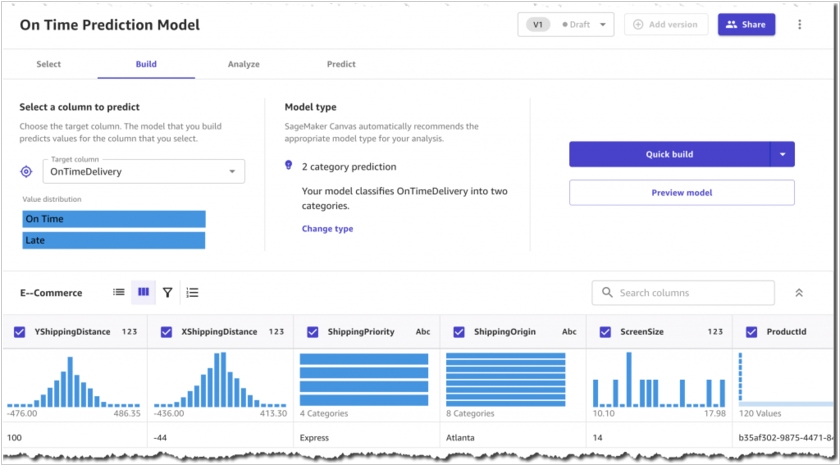
AWS has launched a new machine learning service, Amazon SageMaker Canvas. Unlike existing machine learning services on Amazon, this one is targeted at business users, not data scientists and engineers. SageMaker Canvas promises to enable anyone to build machine learning-based predictive models using a visual interface. Microsoft Azure and other providers also offer similar tools, but AWS's advantage is that many companies already store all their data on AWS.
2021. Amazon Unveils New Machine Learning Chip for AWS
Amazon unveiled the Trn1 chip, specifically designed for deep learning tasks. Observers say this product will directly compete with Nvidia chips. The manufacturer expects training machine learning models using Trn1 to be 40% cheaper than on competing platforms. Instances will offer network throughput of up to 800 Gbps and can be used to form clusters of tens of thousands of systems. Trn1 instances are available in preview. Despite developing its own chips, AWS continues to work closely with Intel, AMD, and Nvidia. Brown stated that his company is making every effort to maintain competition in the segment by offering consumers a choice of processor platforms.
2019. SAP Data Intelligence platform will enable the creation of AI-based business systems
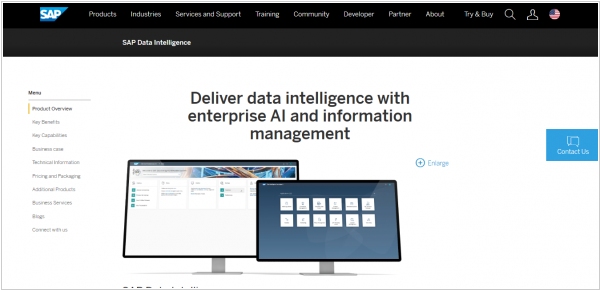
SAP has introduced new data platform, SAP Data Intelligence. This solution enables the creation of machine learning-based services and their integration into enterprise business systems, particularly SAP S/4HANA. The platform provides tools for creating and working with data models, populating them, training, retraining, forecasting, and subsequent industrial operation. The solution can be integrated with SAP systems and any other enterprise software. It is flexibly scalable, suitable for innovative projects of any business, and also makes it possible to attract startups to work with client data.
2019. Google unveiled its AI Platform cloud service for creating ML models
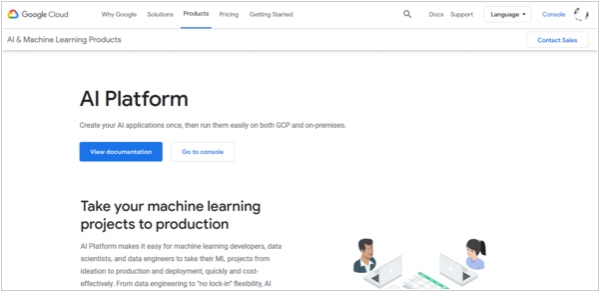
Google has released a beta version of its AI Platform. Users can choose from pre-built data processing algorithms or train and deploy their own model. The platform brings together a variety of existing and new products that together provide a full model development cycle. The AI Platform includes algorithms for data processing and labeling. Most services are paid, but some are free. For example, you can freely use Kuberflow, AI Hub, notebooks, and cloud storage with limitations.
2018. IBM launched cloud platform for training neural networks based on Watson Studio
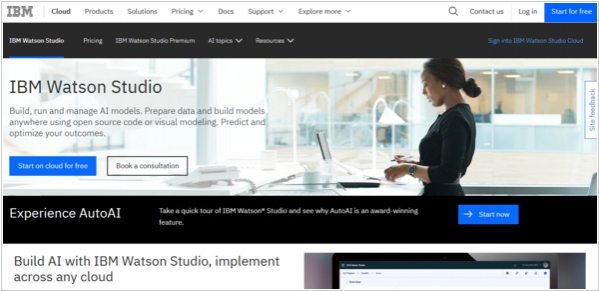
IBM's online platform Watson Studio has received a new addition - Deep Learning as a Service (DLaaS). It enables a wider range of enterprises to leverage the latest advances in machine learning by lowering the barrier to entry. With the new tools, developers can develop their models with the same open-source frameworks they likely already use (e.g., TensorFlow, Caffe, PyTorch, Keras, etc.). IBM's new service essentially offers these tools as cloud services, and developers can use a standard REST API to train their models with the resources they need or within their available budget. IBM claims that its service offers a number of advantages over Azure ML Studio. It offers a visual neural network designer that allows even non-programmers to configure and design their neural networks.
2017. Microsoft added Google's TensorFlow ML platform to Azure
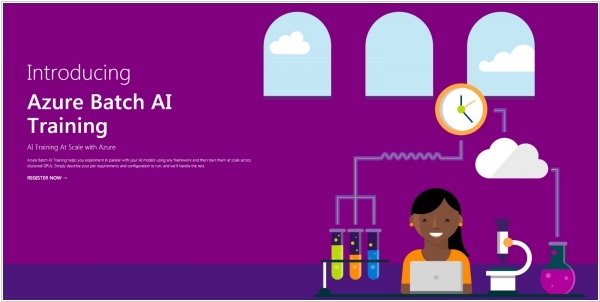
Microsoft has introduced the Azure Batch AI Training toolkit for training deep neural networks, which will soon become part of the Azure Machine Learning platform. It enables the use of the most popular deep learning frameworks: Google's TensorFlow, Microsoft's Cognitive Toolkit, Caffe, and "any other libraries." The system is designed for training deep neural network models, such as recurrent and convolutional neural networks and deep belief networks. One of the key features of such models is that they require large amounts of memory to store and process information about all internal dependencies.
2015. Amazon added machine learning service to its cloud platform

Amazon's cloud platform powers numerous applications. To keep these applications up-to-date and smarter, Amazon has added a new service to the platform: Amazon Machine Learning. It enables the use of machine learning algorithms to create models for finding patterns in big data. Last year, IBM launched a platform that allows third-party applications to leverage Watson's artificial intelligence capabilities, but that focused on specific AI functions (such as speech recognition and machine translation). Amazon, however, offers a more general-purpose tool for processing any big data.