Microsoft Copilot
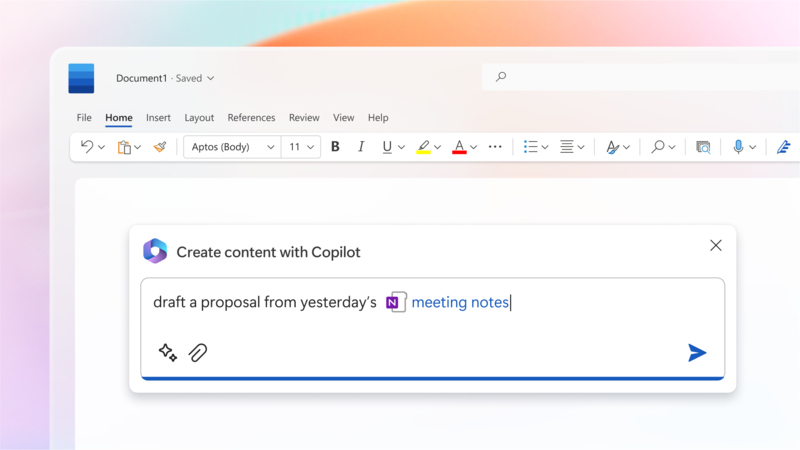
Microsoft 365 Copilot - your copilot for work. It combines the power of large language models (LLMs) with your data in the Microsoft Graph and the Microsoft 365 apps to turn your words into the most powerful productivity tool on the planet.
Add comment
Add comment
Alternatives and relevant products
Users who were interested in Microsoft Copilot, then also viewed:
News about Microsoft Copilot
26.09.25. Microsoft Adds Anthropic Models to Copilot
OpenAI recently signed a $100 billion contract with NVidia, seemingly replacing Microsoft as its preferred partner. And perhaps that's why Microsoft suddenly decided to use models from OpenAI's main competitor, Anthropic, in its AI assistant Copilot (along with ChatGPT). Microsoft signed a deal to use Anthropic's AI in Office 365 applications such as Word, Excel and Outlook. Thus, business users of Copilot will be able to choose between GPT and Claude for specific tasks, such as complex research, building custom AI tools and enterprise-grade agents. For example, Claude Opus 4.1 is better suited for complex reasoning, coding and deep architecture planning, while Claude Sonnet 4 is better suited for routine development tasks, processing large amounts of data and content generation.
2025. Microsoft developed its own AI model - MAI

Microsoft has developed its own AI model, called MAI, which has achieved benchmark results comparable to those of industry leader OpenAI. The company is also working on "reasoning models" designed to handle complex queries (also similar to those developed by OpenAI, Anthropic, and Alphabet). Thus, Microsoft and OpenAI are becoming competitors, and the tech giant is moving away from its dependence on the AI industry leader's technology. Microsoft has invested approximately $14 billion in OpenAI, but the Microsoft-OpenAI partnership agreement (under which Microsoft has the right to use the startup's intellectual property) runs until 2030, so the company is seeking alternative AI technologies to form the basis of Microsoft Copilot, in addition to OpenAI's solutions.
2024. Microsoft’s Copilot is now on Telegram
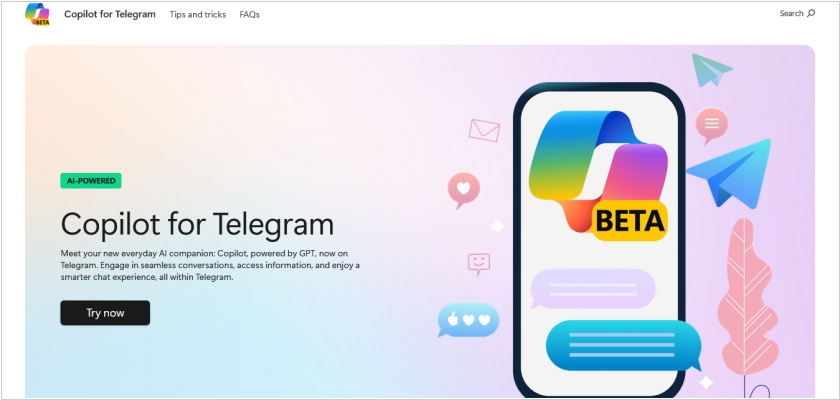
Microsoft’s Copilot, a marvel of generative AI technology, has found its way onto Telegram, where it now lounges comfortably as a beta chatbot, pretending to be your well-informed but mildly eccentric friend. You can summon it by searching for @CopilotOfficialBot and after the obligatory sharing of your phone number (it’s only polite, after all), you’ll be able to ask it anything, from what movie to watch on a rainy Tuesday to who’s winning the latest sporting event. It’s free, available on both mobile and desktop and hints at Microsoft’s grander plans to infiltrate every corner of our digital lives with Copilot—starting with its appearances in Microsoft 365, Teams and even Copilot+ PCs. Telegram’s just another stop on the journey to AI world domination.
2024. Microsoft unveiled Team Copilot
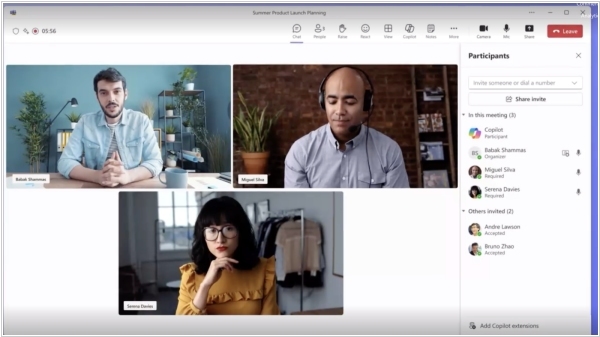
Microsoft has introduced Team Copilot, an AI-powered chatbot that acts as an assistant for entire teams and departments, using the group's shared knowledge to answer questions. Microsoft describes Team Copilot as "an extension of Copilot for Microsoft 365." For example, it can manage video meetings by tracking time and taking notes. In Teams chats, it can summarize what's said and use this information to answer the group's questions. Team Copilot is essentially a way for AI to gather knowledge from multiple people and then use this information to engage with those users. Furthermore, because Team Copilot sessions are accessible to multiple people, the AI can simultaneously interact with multiple users in a single chat.
2023. Microsoft rebrands Bing Chat to Copilot
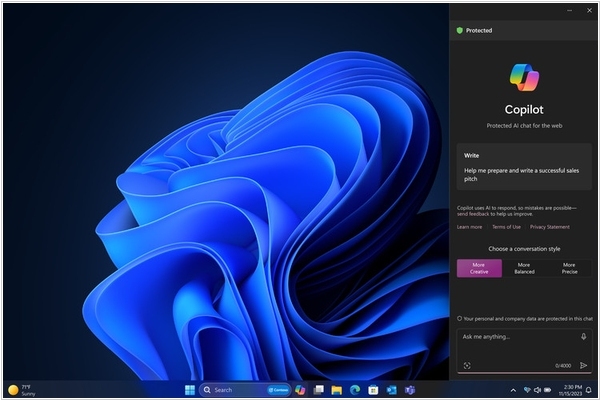
Earlier this year, in an act of boldness that would surely have impressed even the most jaded intergalactic tech enthusiast, Microsoft decided to unleash a mighty AI beast within its Bing search engine, casually plopping in a ChatGPT-like interface as if it had always been there. Fast forward a few months—barely the blink of an eye in the cosmos of rebranding—and Bing Chat has quietly shed its old skin, now emerging as Microsoft Copilot, a name that one can only assume suggests it’ll steer you through the digital ether with all the grace of a well-read starship. This new Copilot is now found lurking in the recesses of Bing, Microsoft Edge and even Windows 11, nudging Google’s AI ambitions aside like a distant memory. And while Microsoft once flaunted its rivalry with Google, the real game seems to be about ChatGPT, as OpenAI casually mentions that a mere 100 million humans are chatting with their AI creation weekly. Microsoft and OpenAI, despite their cosmic alliance (rumored to be worth billions in Earth dollars), are now awkwardly elbowing each other out of the way, both eager to convince the same users that their AI assistant is the digital companion of choice for both cubicles and living rooms alike.
2023. Microsoft integrated ChatGPT into Dynamics 365.
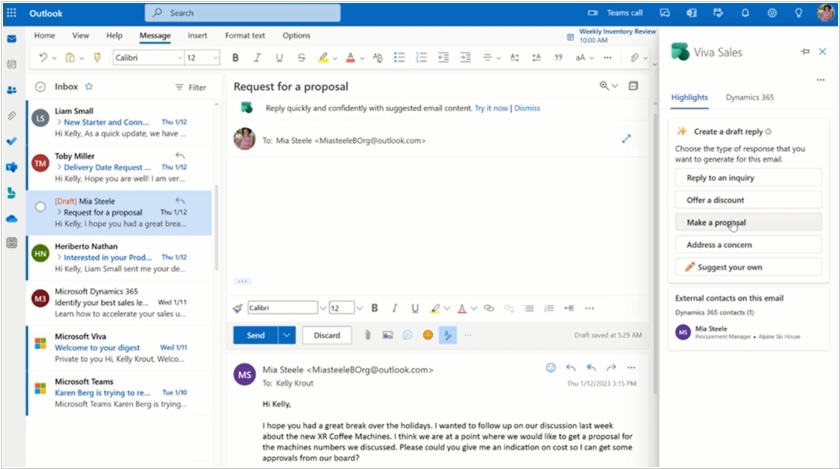
Microsoft is taking full advantage of its $10 billion partnership with OpenAI. Following the Bing search engine, Edge browser, and Skype and Teams messaging apps, a GPT-4-based neural network called Copilot has become available in the Dynamics 365 CRM/ERP system. It automates certain repetitive sales and service tasks. For example, Copilot can help you write email responses to customers and send sales team meeting summaries in Teams via Outlook. In Dynamics 365 Customer Service, Copilot can create "contextual responses" to customer inquiries via chat or email and provide "live chat" for customer service agents that draws on the knowledge base and case history.
2023. Microsoft launches new Bing and Edge browser with ChatGPT
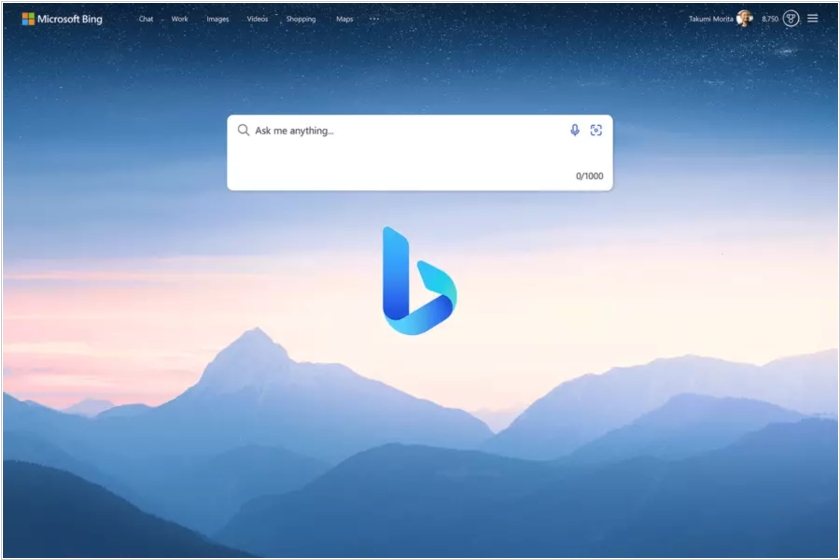
Microsoft is pulling out all the stops in an effort to better compete with Google. The company has announced its long-rumored integration of OpenAI’s GPT-4 model into Bing, providing a ChatGPT-like experience within the search engine. As expected, the new Bing now features the option to start a chat in its toolbar, which then brings you to a ChatGPT-like conversational experience. Microsoft is also launching a new version of its Edge browser, with these new AI features built into the sidebar. With the new browser, web users are able to do things like summarize search results with AI’s help and converse with AI chatbots to get their questions answered, among other things.