
Box
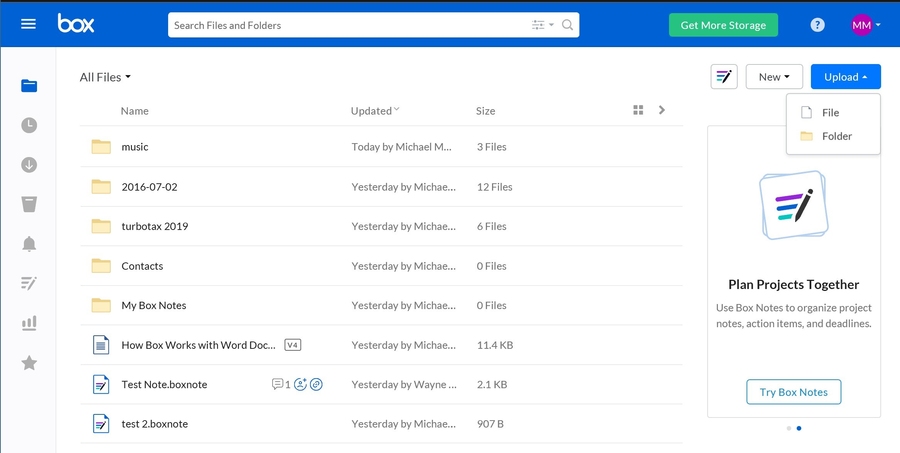
Box offers free cloud storage and file sharing services that enables you to securely share and access files online. Companies rely on Box because it's secure, works on any device and scales to meet the needs of small businesses and Fortune 500 companies.
Comments: 2
Comments: 2
Alternatives and relevant products
Users who were interested in Box, then also viewed:
News about Box
2017. Box introduced desktop app Box Drive

Box unveiled Box Drive, a desktop application that works on Windows and MacOS. Users will be able to credit, edit, find and share files without pulling up a web browser. The desktop app makes it easier to access the cloud because it creates just another drive on your computer like your C drive, so inherently you’re interacting with your local file experience. The app itself is free, but large enterprises like General Electric, P&G and The Gap pay Box for added functionality. Existing customers will have access to the full range of Box Drive capabilities. Earlier this month, Box announced integration with Apple’s new Files app. It will be another way to access Box documents across iOS devices.
2015. Box integrated with MS Office online editors
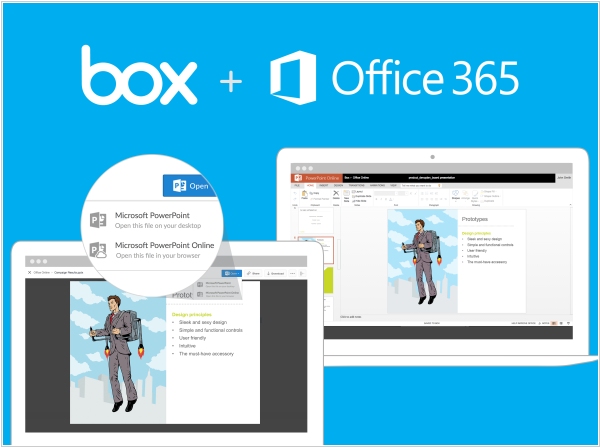
Box, a popular online file collaboration service, now lets to open files in online versions of Word, Excel and PowerPoint, edit them in the browser, and save them back to your cloud storage. This is thanks to integration with Microsoft's free online suite, Office Online. Box previously had similar integration with Office 365, but it was only available to paid Office subscribers. Now, anyone can view and edit their files in Box. We also remind you that Box recently added integration with the MS Office mobile apps for iPhone/iPad. However, it works slightly differently: it allows you to open files stored in Box from the Word, Excel, and PowerPoint mobile apps.
2015. Box has become the most secure cloud storage in the world
Cloud storage services like Box, Dropbox, Google Drive, and OneDrive are quite secure for storing business data and electronic archives. However, some companies have very high security requirements. They are concerned that, although data is encrypted at rest and in transit, the service provider can still access it if they know the encryption keys. For these companies, Box has introduced a new service, Box EKM, which allows companies to independently generate and store encryption keys. To ensure this doesn't negatively impact the service's usability (so that administrators don't have to install a master key on every computer and smartphone), Box has integrated its storage with Amazon CloudHSM, which provides cloud key storage. Each file uploaded to Box is encrypted with an individual encryption key. Furthermore, the company receives a full access log for each file.
2014. Box Introduces Unlimited Cloud Storage, Office 365 Integration
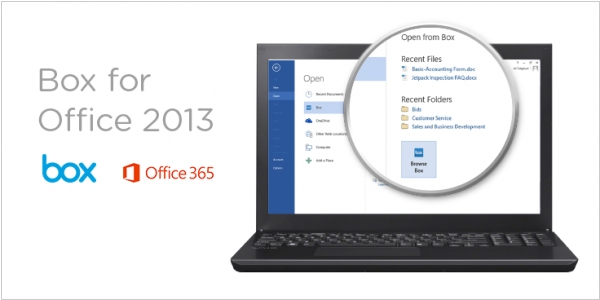
Aaron Levie, CEO of file storage and collaboration service Box, announced that the Cloud Wars are over. At least in terms of the cost of gigabytes of cloud storage. The standard price for this resource is now zero. In other words, Box business plans no longer have a limit on the size or number of files your company's employees can upload to their online accounts. As a reminder, Google recently launched a corporate version of Google Drive, also with unlimited cloud storage. In addition to removing the limit, Box introduced plugins for integration with Office 365. The first plugin, for Outlook, allows you to quickly attach links to files stored in Box online storage to emails (instead of sending the files themselves). The second plugin allows you to open and save documents from Box storage in Office desktop editors.
2013. Box offers 10GB of free storage and low-cost version for SMB
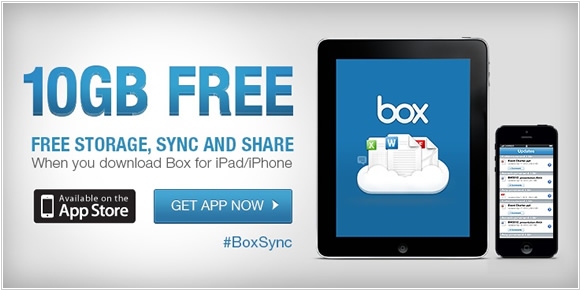
The developers of the file collaboration service Box are simply amazing. Typically, startups like Box, having achieved great success (180,000 corporate clients) and signed up corporations like Procter & Gamble, Eli Lilly, EA, and NBC Sports, forget about individual users (freeloaders) and small businesses and focus on big money. But Box doesn't forget. They recently increased the cloud storage limit to 10 GB for single-user accounts and added a low-cost version for small businesses: 100 GB for $5/month/user. That's about half the price of, say, Dropbox. It's important to remember that Box isn't just online storage, but a collaboration system with access control, comments, tasks, version history, file synchronization between devices, mobile access, and online editors.
2013. Wrike integrates with Box
One of the advantages of the well-known project management service Wrike is its extensive functionality for document collaboration. Now, in addition to the existing integrations with Google Drive and Dropbox, a new one has been added – with the equally popular service Box. This allows users to directly attach files from Box to tasks in Wrike and collaborate on them online, while all project documents are conveniently organized in a single workspace. An additional benefit for those who use the mobile versions of Wrike and Box is the ability to attach files to tasks directly from their smartphone.
2012. How Box plans to beat Salesforce? Speed.

Salesforce has unveiled ChatterBox - file storage and synchronization service, that may be the worst news ever for Box.net. According to rumors, Marc Benioff decided to create a competitor to Box in response to Box poaching several top managers from Salesforce. The confrontation between the companies began even though Salesforce is one of Box's investors. But Box is no longer a small startup that will hold its breath while big brother destroys its business. Box is getting ahead of the game. Just before Dreamforce, Box unveiled its new global data network, Box Accelerator, which increases data loading speeds on Box.net by 10%. Now Box claims that their service offers data transfer speeds that are twice as fast as Google Drive and four times faster than DropBox. After all, speed is important for business, right?
2011. Box.net Named Market Leader in Mobile Collaboration Solutions
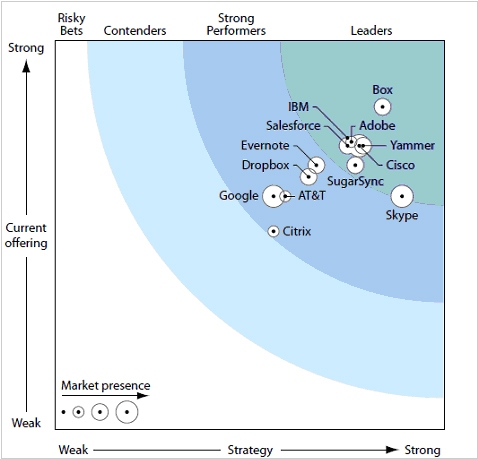
The analytics company Forrester published a report on the mobile collaboration solutions market. The results are a bit strange. For example, Google (which provides great mobile access to almost all of its services) was at the bottom of the list. And Microsoft is completely absent (but its new division, Skype, turns out to have the best mobile strategy). As for the leader, Box.net, this service has really achieved great success recently. With a feature-rich but effective app and strong marketing, Box.net regularly attracts investment and new customers. Take, for example, its latest contract with Procter & Gamble for 18,000 workstations. The service has a total of 6 million users. However, this includes users of the free version, which offers a whopping 5GB of free storage. As for mobile access, until recently, Box.net only supported iPhone and iPad perfectly. However, the service recently released a mobile app for Android.
2010. Box.net integrates NetSuite, SugarCRM, Salesforce, Google Apps
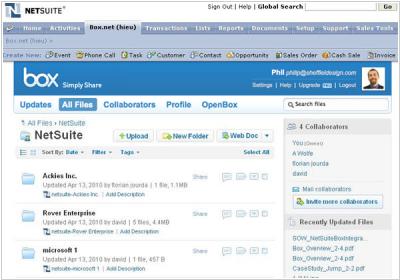
Major SaaS vendors are now less interested in providing applications - they want to create web platforms and grab the world (and earn commission on the other developers). Salesforce was the first to play this game, then Google, NetSuite, SugarCRM and others jumped into this wagon. Box.net (that doesn't have such financial strength as the above mentioned companies) invented even more interesting platform strategy. Box.net wants to be present on each popular platform. First, they created the connector for Force.com, then joint the Intuit Partner Program and Google Apps Marketplace, and recently released modules for SuiteCloud and Sugar 6. Thus, they build the cross-platform cloud content management system. This system allows to store all content in a single online repository and access it in different SaaS systems used in the company: CRM, ERP, Collaboration system. Even more interesting is the opportunity to create shared cross-company extranet based on Box.net: for example, the same file may be available from Salesforce account owned by company A and NetSuite account owned by company B.